
Los Angeles
Breast Reconstruction Los Angeles
Rebuilding the breast after mastectomy or lumpectomy using implant-based and autologous (your own tissue) techniques. Dr. Li has performed thousands of reconstructions over more than a decade.
What is breast reconstruction?
Breast reconstruction rebuilds the shape of the breast after mastectomy or lumpectomy. Dr. Wai-Yee Li uses both implant-based and autologous (your own tissue) techniques — including the latissimus flap and direct-to-implant prepectoral reconstruction — and has performed thousands of reconstructions over more than a decade in Los Angeles.
Feel confident with renowned plastic surgeon, Dr. Li
What is Breast Reconstruction after mastectomy?
Breast reconstruction involves rebuilding the breast after mastectomy (surgical removal of the breast). This is often after being diagnosed with breast cancer or to prevent getting cancer in high-risk patients. This includes patients with a strong family history or genetic mutations such as BRCA1 or BRCA2. In some cases, patients may wish to undergo mastectomy for other reasons, such as benign disease like multiple painful cysts or lumps.
Book a consultation with Dr. Li
See Dr. Li in Los Angeles and learn more about how she can reach your aesthetic goals.
Regardless of the reason for undergoing a single or double (‘bilateral’) mastectomy, the breast mound(s) can be reconstructed using two main techniques: implant-based reconstruction or using the patient’s own tissue – known as ‘autologous reconstruction’. In some cases, a combination of both tissue and implants can be used, depending on a patient’s original breast size and desired size. We will discuss these techniques in further detail, as well as the pros and cons of each procedure and the different subtypes.
Dr. Wai-Yee Li has been performing breast reconstruction and cosmetic breast plastic surgery for over 10 years. During this time, she has rebuilt thousands of breasts using various techniques. Many patients come to see her for ‘revision’ breast reconstruction, after getting unsatisfactory results from their first surgery. Here, she will address the common questions asked by her patients.
Oncoplastic breast reconstruction is used for rebuilding the breast when a lumpectomy has been performed. This means that only the diseased part of the breast has been removed and this is covered in more detail down below.
Benefits of Breast Reconstruction
There are several benefits of breast reconstruction, and these are confirmed by numerous research studies over decades of research. These include: improved body image, better self-confidence, better posture, easier to wear clothing, particularly swimwear and more revealing clothes like evening dresses.
When is Breast Reconstruction Performed?
Immediate Breast Reconstruction
In many cases, breast reconstruction can be performed on the same day as your mastectomy. This is known as ‘immediate’ breast reconstruction. Dr. Li has performed many immediate breast reconstructions, where patients go into surgery for mastectomy and come out with a newly reconstructed breast or breasts. The main benefit of immediate breast reconstruction is that patients never have to go flat and feel dramatically different. They also do not have to come back for reconstruction another day, so called ‘one-and-done’.
Typically, once you have decided to proceed with mastectomy and reconstruction, Dr. Li and her team would co-ordinate with your breast surgeon to find a mutually convenient and timely date for your surgery. Many patients seek out Dr. Li for her reconstruction before even seeing a breast surgeon, since they already know they want a mastectomy; after all, what they look and feel like is important for them in the long term. Dr. Li works with several excellent breast surgeons that she can connect you with for a smoother clinical experience.
Delayed-Immediate Breast Reconstruction
In some cases, immediate reconstruction may not be recommended. This is mainly in situations where the breast surgeon (or surgical oncologist) is not certain they can get the entire tumor out and prefers to wait until after the mastectomy or lumpectomy. This is known as getting ‘clear margins’ and means that the tissue that has been removed and checked by a pathologist, before proceeding with reconstruction.
This is also a good option for patients who live out of town and would prefer to get their mastectomy close to home and travel to Southern California for Dr. Li to perform their reconstruction. Dr. Li has a lot of experience in delayed-immediate reconstruction, where the mastectomy or lumpectomy is performed first and the reconstruction is performed 2-3 weeks later.
Delayed Breast Reconstruction
Some patients never got reconstruction at the time of their mastectomy. Delayed reconstruction of the breast can take place months to years after the mastectomy has been performed. This could be due to patient choice: understandably, many patients feel overwhelmed at the time of diagnosis, when they are going through other treatments such as chemotherapy and radiation. In these circumstances patients are not ready to commit to reconstruction. In some cases, patients present with advanced disease and planning for radiation and their doctors may recommend waiting before getting reconstruction.
It is important to seek advice from your doctors to see what is best in your situation. Some patients may not be in best condition to get reconstruction, such as needing to lose weight or quit smoking for best healing and outcome from their reconstruction. Dr. Li has performed delayed breast reconstruction on many hundreds of patients (see Direct to Implant Gallery).
Should I get implants or autologous breast reconstruction?
Using implants to reconstruct the breast is the commonest method of breast reconstruction in the USA. This simply means that we replace the breast tissue that has been removed with an implant that comes off the shelf. Autologous reconstruction means that we rebuild your breast using tissue from another part of your body. Examples include the DIEP flap (deep inferior epigastric perforator flap) which involves taking tissue from your abdomen.
There are also hybrid reconstructions where we use your tissue and place an implant; a good example would be the LAT flap (latissimus dorsi pedicled flap) from the back, and we add an implant for a more youthful look. Dr. Li specializes in the LAT flap, and she ‘invented’ the ‘Combined Bra-Line Back Lift-LAT flap’ or BLBL-LAT flap for those patients who want to get rid of their back rolls and create a breast at the same time.
Using implants to reconstruct the breast is the commonest method of breast reconstruction in the USA. This simply means that we replace the breast tissue that has been removed with an implant that comes off the shelf. Autologous reconstruction means that we rebuild your breast using tissue from another part of your body. Examples include the DIEP flap (deep inferior epigastric perforator flap) which involves taking tissue from your abdomen. There are also hybrid reconstructions where we use your tissue and place an implant; a good example would be the LAT flap (latissimus dorsi pedicled flap) from the back, and we add an implant for a more youthful look. Dr. Li specializes in the LAT flap, and you can read more about this technique here. She ‘invented’ the ‘Combined Bra-Line Back Lift-LAT flap’ or BLBL-LAT flap for those patients who want to get rid of their back rolls and create a breast at the same time.
Further resources:
- Optimizing the Pedicled Latissimus Dorsi Myocutaneous Flap in Breast Reconstruction: Lessons Learned from 110 Consecutive Flaps
- The Combined Bra-Line Back Lift Latissimus Flap (BLBL-LAT Flap) for Aesthetic Breast Reconstruction and Simultaneous Back Contouring
The choice between implants or autologous breast reconstruction is sometimes related to the extent of disease. For instance, where some of the skin of the breast is involved and has to be removed with the breast tissue, autologous reconstruction may be the only option. This is because when you take a LAT or DIEP flap, you transfer some skin with the underlying tissue to restore the shape of the breast. Similarly, when patients have undergone radiation, it is considered standard of care to use some form of autologous reconstruction because implants and tissue expanders tend not to heal or can develop capsular contraction.
Check out my YT video on breast reconstruction after radiation:
Breast Reconstruction with Implants– saline or silicone?
Most breast implants are manufactured devices that consist of a shell and a filling. This filling is composed of silicone gel or saline (salt water). The one exception is the Motiva silicone breast implant, and these will be discussed below when discussing different implant brands. Regardless of the brand, these implants are the same devices used for cosmetic augmentation mammoplasty (aka ‘boob job’ or breast augmentation), where patients seek implants to enhance the size and volume of their natural breasts for cosmetic purposes.
The benefit of saline (salt water) implants includes cost (cheaper than silicone) and when they leak, they deflate, and the saline is absorbed by your body. The big disadvantage and why saline implants are not recommended for mastectomy patients is that they don’t look or feel as natural. They are very prone to rippling – where you can see a lot of uneven wrinkling on the implant surface. With cosmetic augmentation the implant is covered by the patient’s own native breast tissue and the rippling is not as noticeable.
However, after mastectomy, the implant is only covered by skin and a small amount of tissue, and the ripples are much more noticeable. It is unusual, but possible, to get breast reconstruction using saline implants.
What size breast implants will I get after mastectomy?
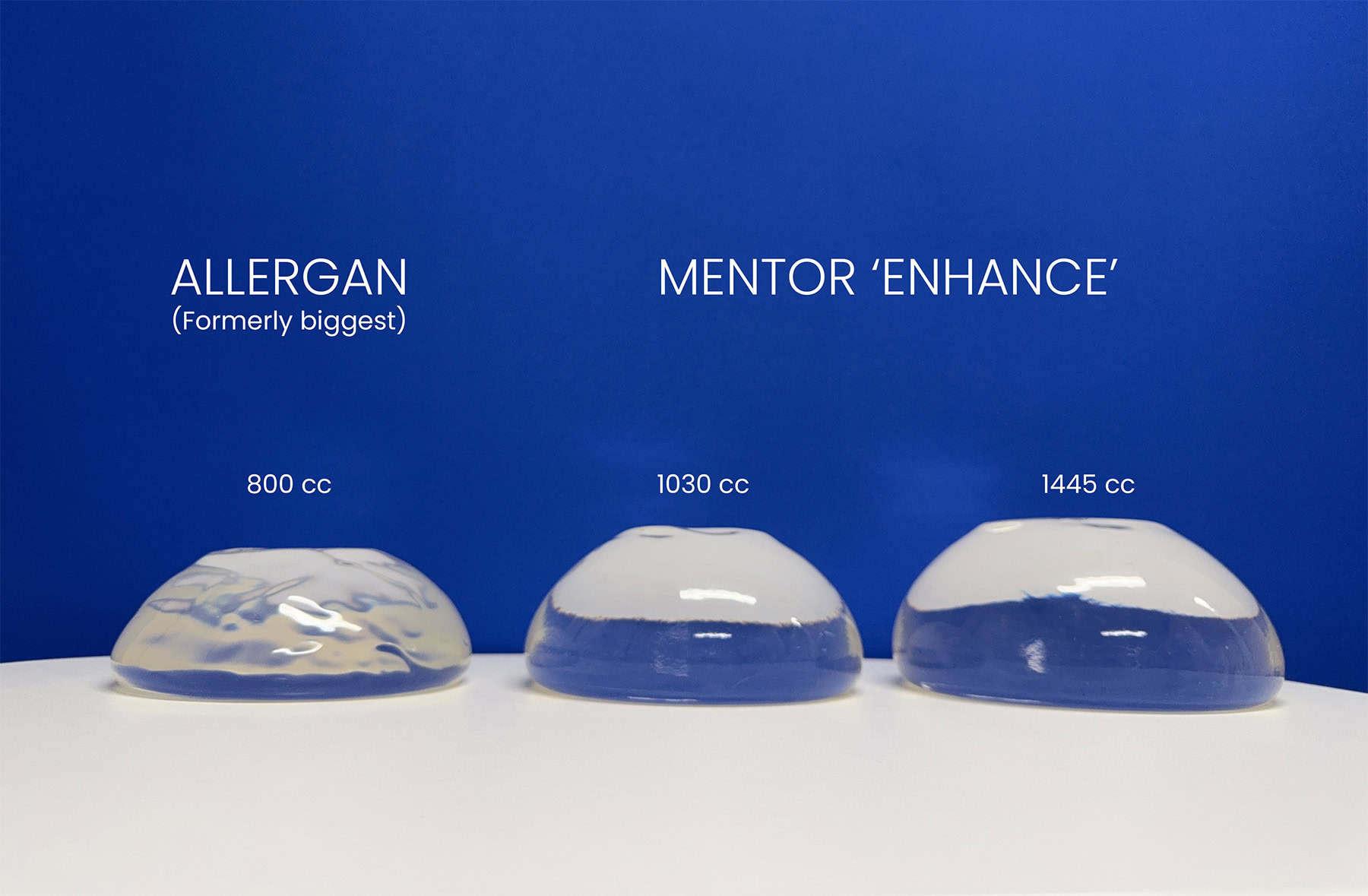
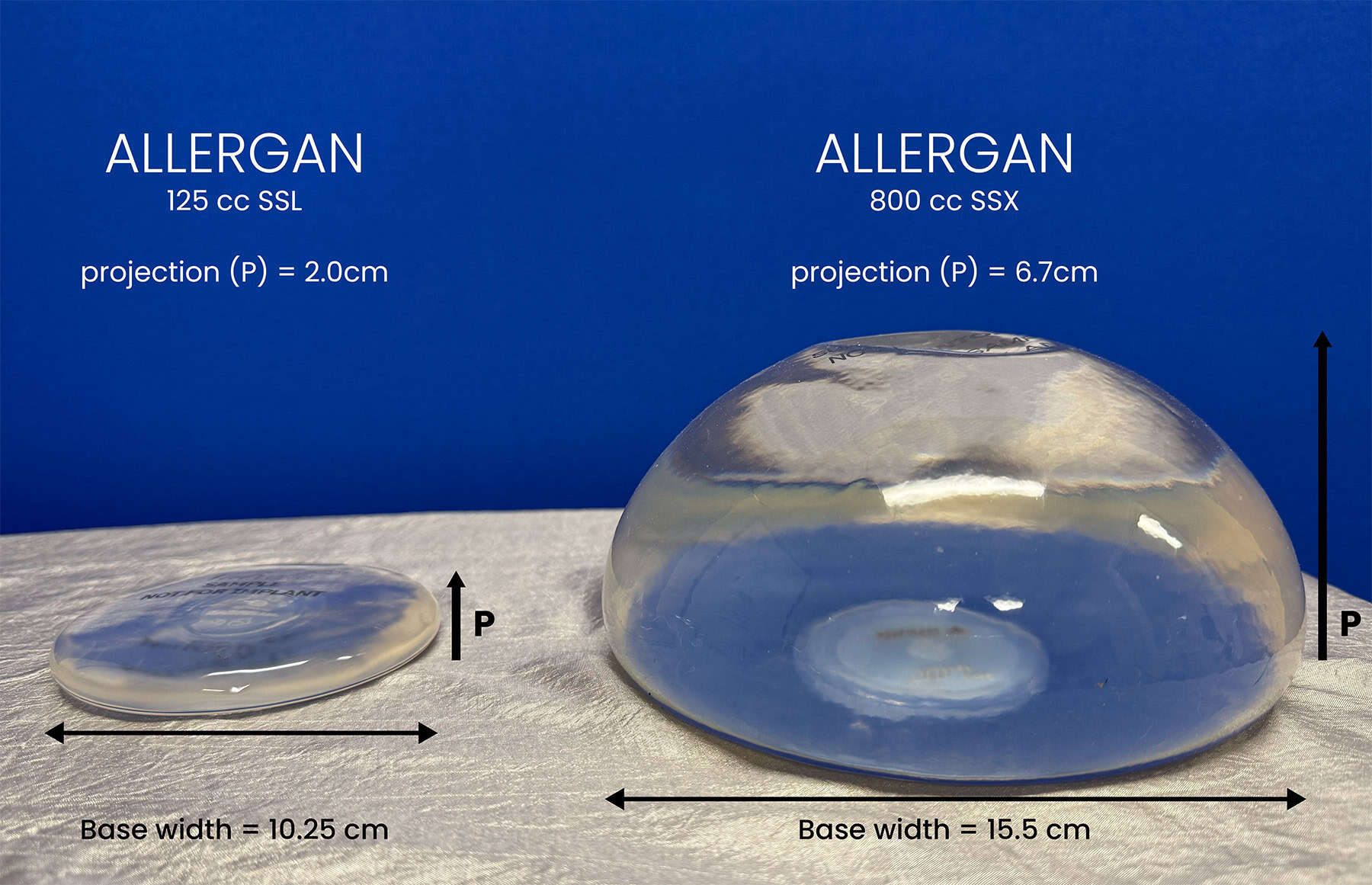
Implants come in different sizes (known as ‘volume’ and measured in cc). The smallest implant is 80 cc and, until recently the largest available silicone implant was 800cc. In May 2025 the FDA approved the Mentor MemoryGel™ Enhance Breast implant, with a range of 930 to 1445 cc (Figure 1). Breast implants also come in different projections – this means how much they ‘stick out’ (see Figure 2).
Depending on the brand, these projections or ‘styles’ are named differently. For example, the Allergan range uses the last letter to describe the projection. For any breast width, they have five projections: ranging from lowest ‘L’ to the highest ‘X’. The size being used in your reconstruction depends on several factors and is a decision between you and your plastic surgeon. This depends on your breast size before surgery and the desired size. In some cases, additional steps may be recommended, such as tissue expanders (this is discussed under the ‘tissue expanders’ section).
During your consultation, Dr. Li will establish what your ultimate goals are; for example, most patients say, ‘I want to be similar to how I am now’ others want to be ‘a bit bigger’ or ‘a bit lifted’ or even ‘much smaller’, before surgery takes place. Clearly, if you are having double mastectomy, this is easier to make both breast match for symmetry. If you have only one side mastectomy and change breast size, you will need a symmetrizing surgery on the breast for symmetry.
For immediate breast reconstruction, Dr. Li never guarantees a particular implant size because the decision depends on how healthy the tissues are after the mastectomy has been completed. This can only be assessed on the day of surgery. Sometimes Dr. Li will use a special non-invasive scan called an ICG (indocyanine green) perfusion scan during surgery to assess how healthy the tissues are. Usually, Dr. Li will choose a range of sizers (these look like implants but are only designed for single use in the OR or clinic) to try after mastectomy is done, before she selects the final implant to be placed.
What are Textured and Smooth Breast Implants?
Breast implants also have different surfaces; smooth or textured. Textured simply means that feel ‘rougher’ because they have a special coating. They feel a bit like sandpaper when you touch them. These textured implants were designed mainly for cosmetic augmentations, to decrease capsular contraction (where thick scar tissue develops and the implant can feel very hard).
In the past 10 years, textured implants have been linked to a rare blood cancer called anaplastic large cell lymphoma (ALCL). This prompted a recall of certain types of implants (see below). Textured implants are still widely available and remain popular in Europe, but Dr. Li does not recommend textured implants and has never herself used textured breast implants.
Was there a recall for textured breast implants in the US?
Yes. In 2019, Allergan, one of the biggest breast manufacturers, recalled a specific type of breast implant: the Biocell textured breast implant. This was at the request of the FDA (US Food and Drug Administration) due to links to ALCL. For more information visit the FDA’s website. When you meet with your plastic surgeon, it is important to ask questions regarding the implants you are choosing.
What are the different breast implant shapes?
Breast implants come in different shapes based on their base or ‘footprint’. These include round (most common), and tear drop. Most surgeons will use round implants for breast reconstruction. Tear drop implants are most frequently textured implants, which Dr. Li does not recommend. Tear drop implants also tend to feel more firm and less suitable for breast reconstruction due to patients having no breast tissue to cover the implant.
What is prepectoral vs subpectoral breast implant reconstruction?
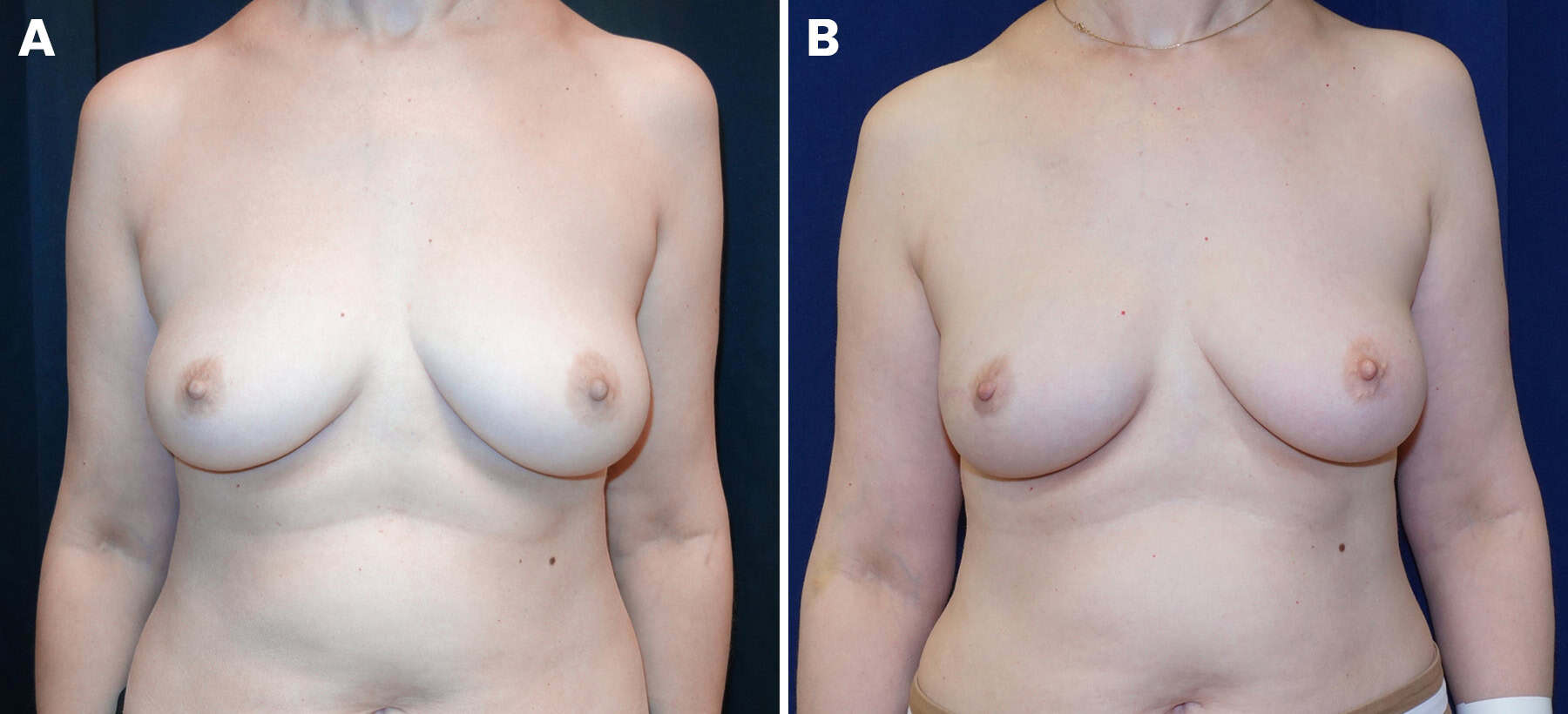
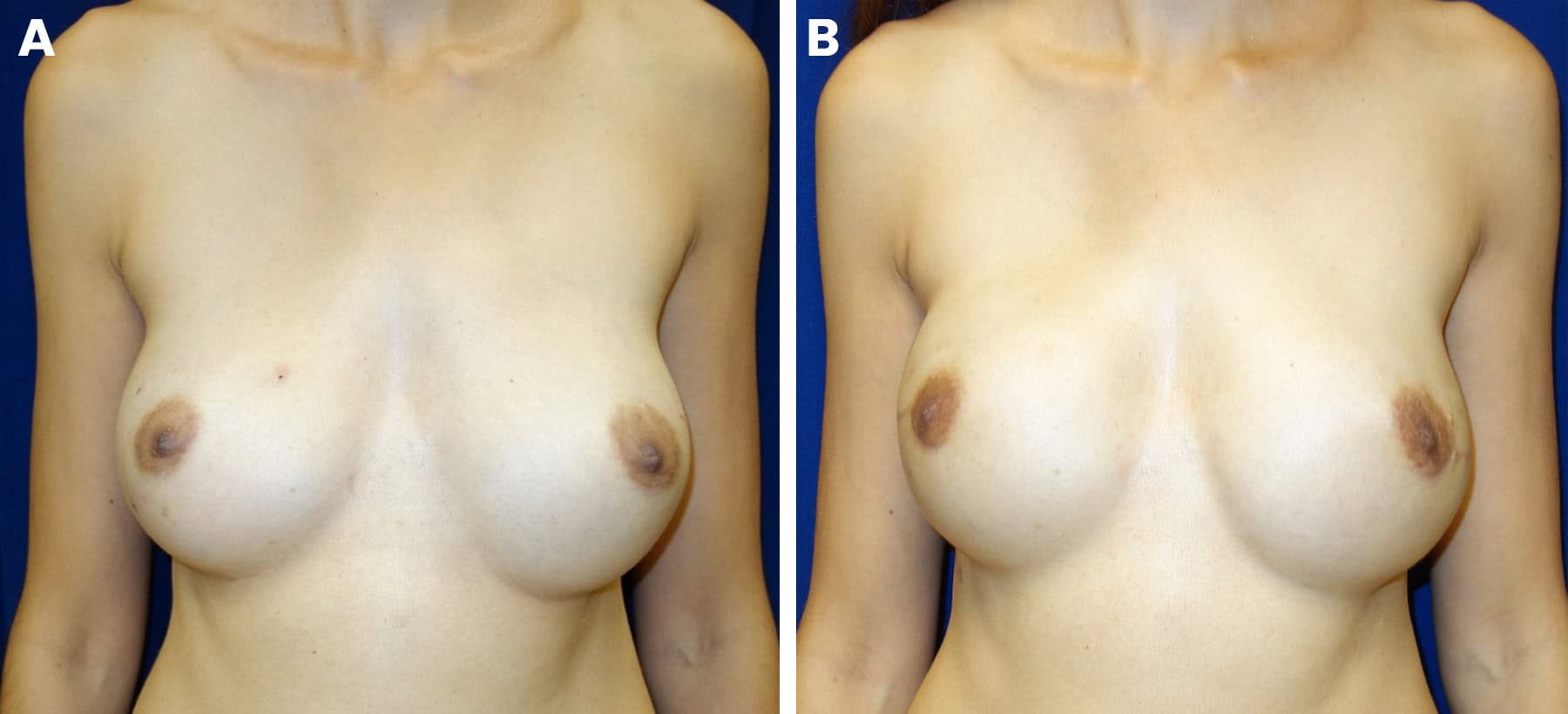
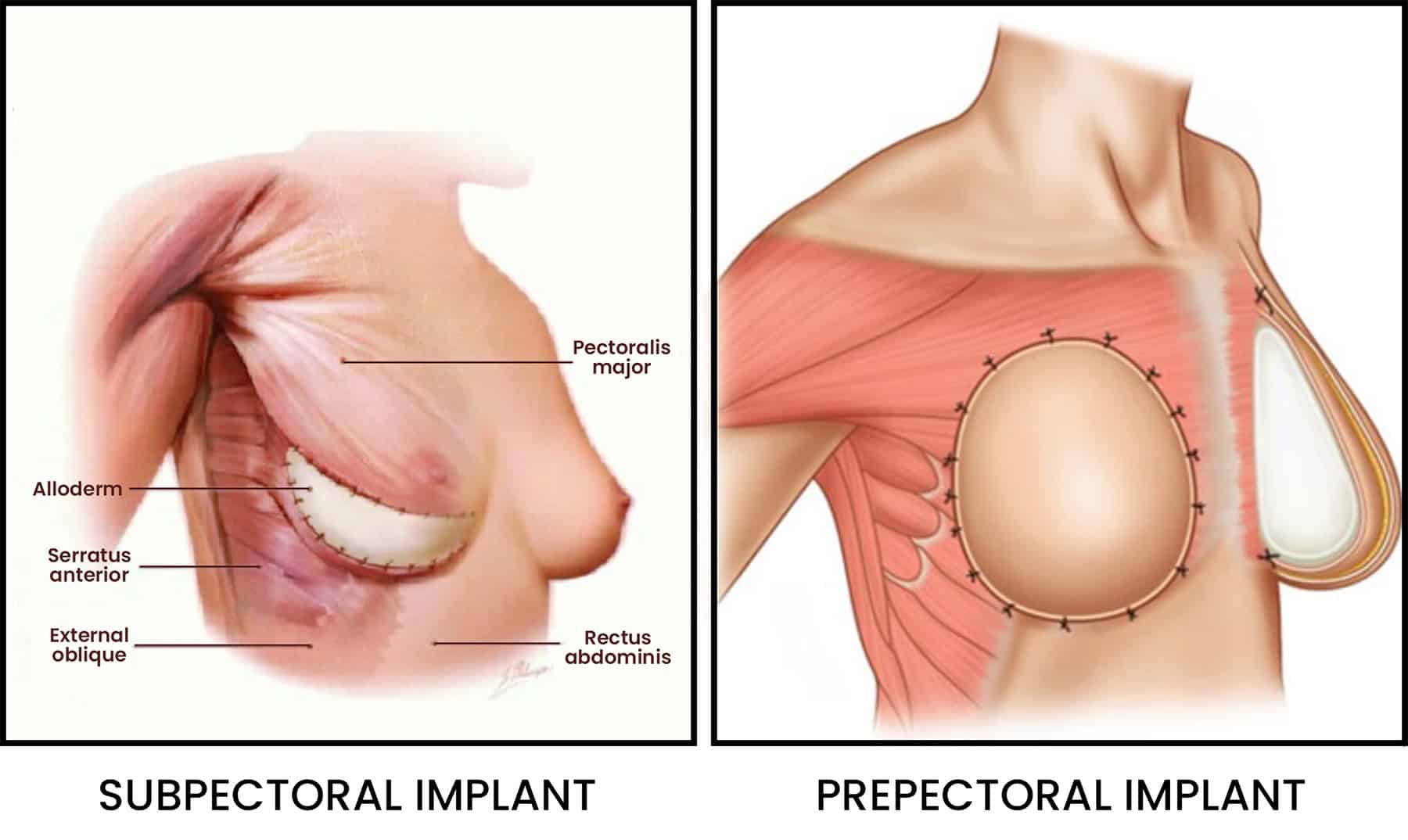
In normal anatomy, the breast tissue is located above the pectoralis major muscle, a large triangular muscle in the chest wall that assists in flexing and extending your arms. In the past, and it is still true for cosmetic augmentation, most breast implants were placed under the muscle – also known as ‘subpectoral’ implant reconstruction – for support (See Figure 3 and Figure 4). In recent years, most plastic surgeons, including Dr. Li, prefer to place the implant in front or ‘above’ the pectoralis major muscle. This is known as ‘pre-pectoral’ implant placement (See Figure 5 and Figure 6).
What are the advantages and disadvantages of prepectoral vs subpectoral implant breast reconstruction?
A decade ago, almost all plastic surgeons, including Dr. Li, were placing all implants under the muscle (subpectoral) for breast reconstruction cases after mastectomy. With the development and increase use of biological meshes, the prepectoral implant reconstruction has been rapidly gaining popularity. Dr. Li has vast experience in both subpectoral and prepectoral implant reconstruction, performing hundreds of case of each. In contrast, some of the recently qualified plastic surgeons, or the much older plastic surgeons, are unlikely to have the same level of experience in both types of reconstructions and understand the ideal situations to use either technique.
There are several advantages of prepectoral implant breast reconstruction:
- Prepectoral implant placement is more anatomical; the implant is being placed in the normal location of the breast tissue that it is replacing
- The pectoralis major muscle is not dissected. This means potentially less bleeding and less pain after surgery
- There is no ‘animation’ deformity. When the implant is under the pectoralis major muscle, there is a noticeable ‘twitch’ or ‘jumping’ of the muscle on the chest wall, whenever the arm moves and activates the pectoralis major muscle.
- In patients that need radiation after mastectomy and breast reconstruction, there tends to be less capsular contraction or ‘hardening’ of the reconstructed breast when the implant is prepectoral.
There are some disadvantages of prepectoral implant breast reconstruction:
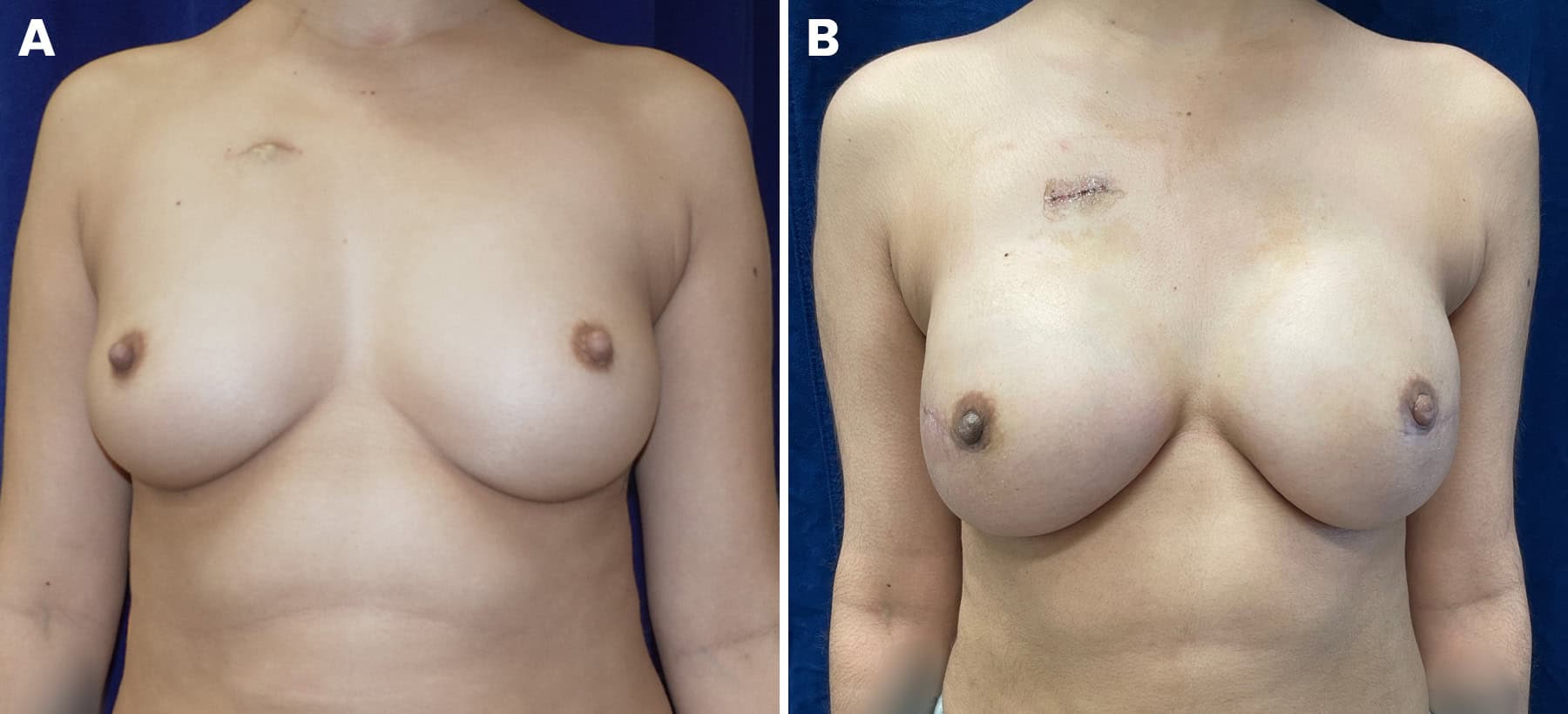
- The implant can be more visible because there is less tissue covering the implant. The breast tissue has been removed and what remains is the skin and a small amount of tissue beneath this. This is particularly the case in thinner patients and especially over the top part of the implant – also known as the ‘upper pole’. When the implant is under the muscle, the muscle provides more bulk to cover the top of the implant, making it a smoother contour (see gallery case 1218).
- The implant is relying on the skin for support, which is not as strong as muscle. This means that if the breast implant is heavy (like 800cc) and the skin of the breast has been previously stretched out (seen in older patients and women with larger breasts) the reconstructed breast can look quite droopy or ‘ptotic’.
What are Tissue expanders?
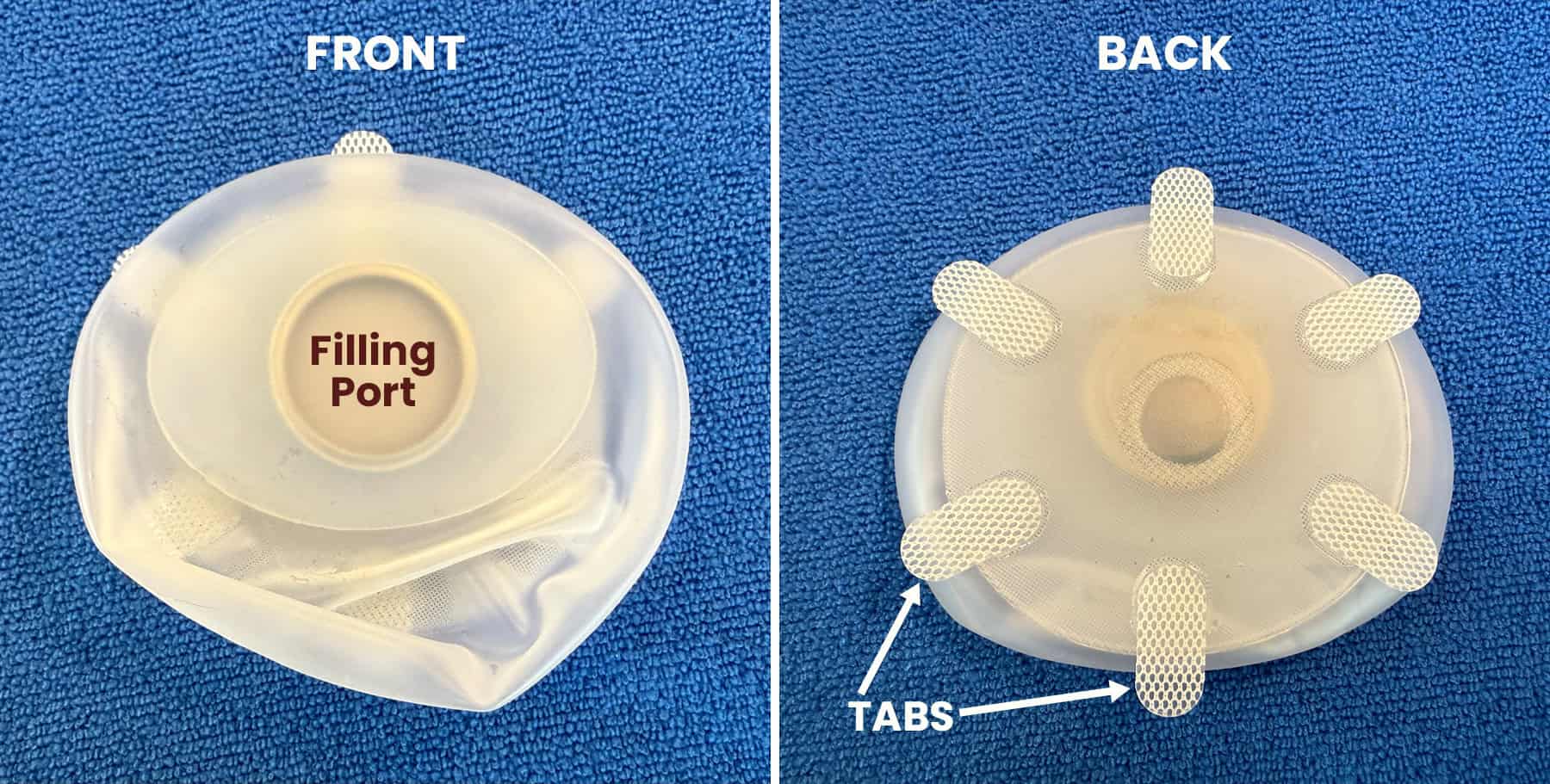
Tissue expanders are medical devices, much like an empty breast implant shell (see Figure 7 and Figure 8). Many plastic surgeons in the USA and worldwide like to use them for breast reconstruction as place holders. After the mastectomy has been performed, for immediate reconstruction, the tissue expander is stitched to the patient using the tabs seen in Figure 7.
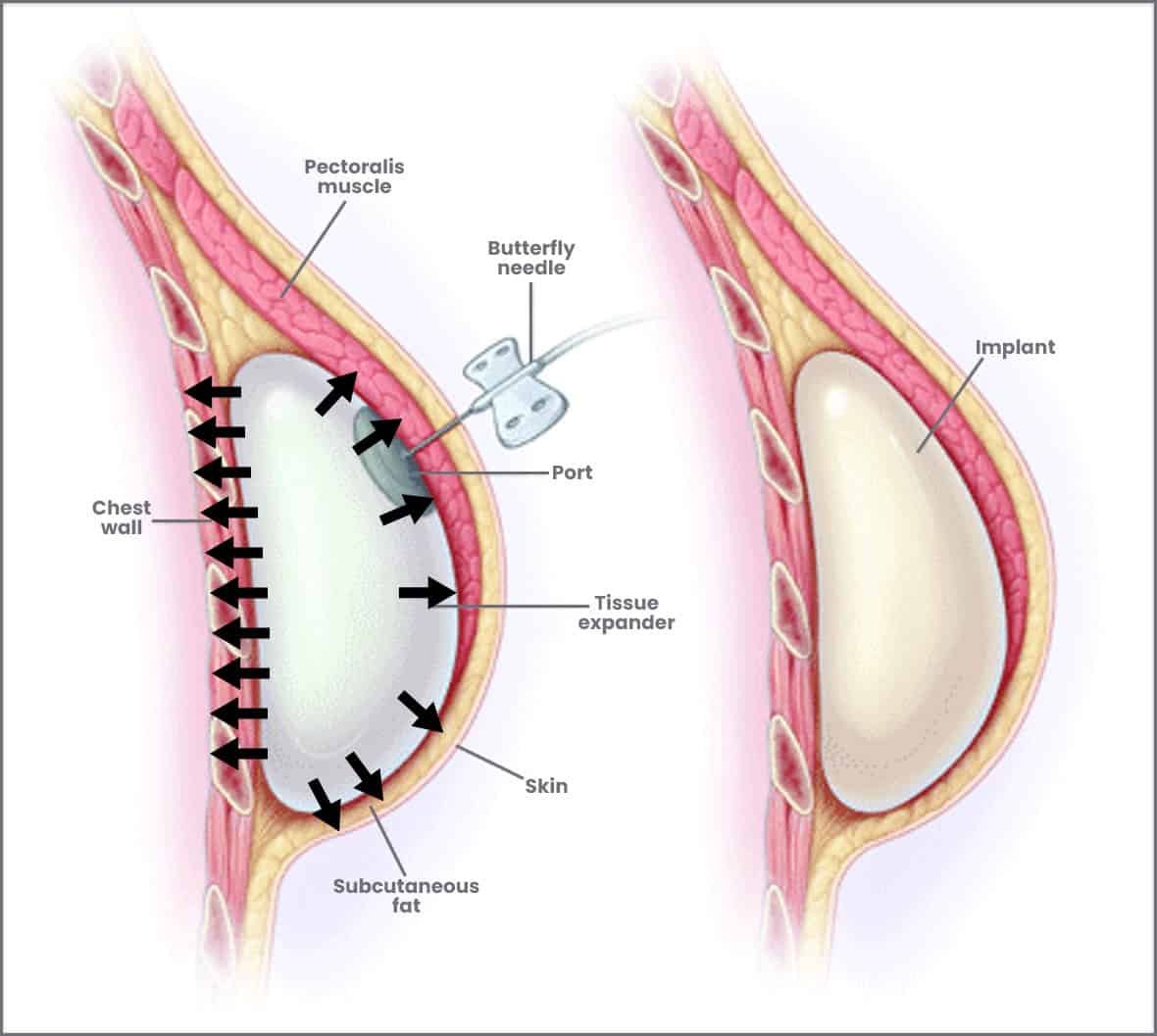
When Dr. Li does use tissue expanders, she likes to fill some saline during the initial surgery. This saves the patient additional fills after surgery to reach the desired volume. Tissue expanders contain a metal ‘fill’ port which is used to fill them with saline after the surgery has been done. They are gradually expanded to inflate them and stretch out the skin and tissues (see Figure 8). This means weekly visits to the plastic surgeon until the desired volume or size is reached.
Once the target volume is reached, the patient is scheduled for a second surgery to swap out the expander for a regular breast implant. In some cases, the expander is used to hold the space (so the tissues don’t cave in after mastectomy) for patients to get radiation and then later come back for autologous reconstruction. Whilst Dr. Li has extensive experience with tissue expanders, she reserves them for patients who have very little tissue after mastectomy (see Figure 9) or patients who want a big increase in breast cup size.
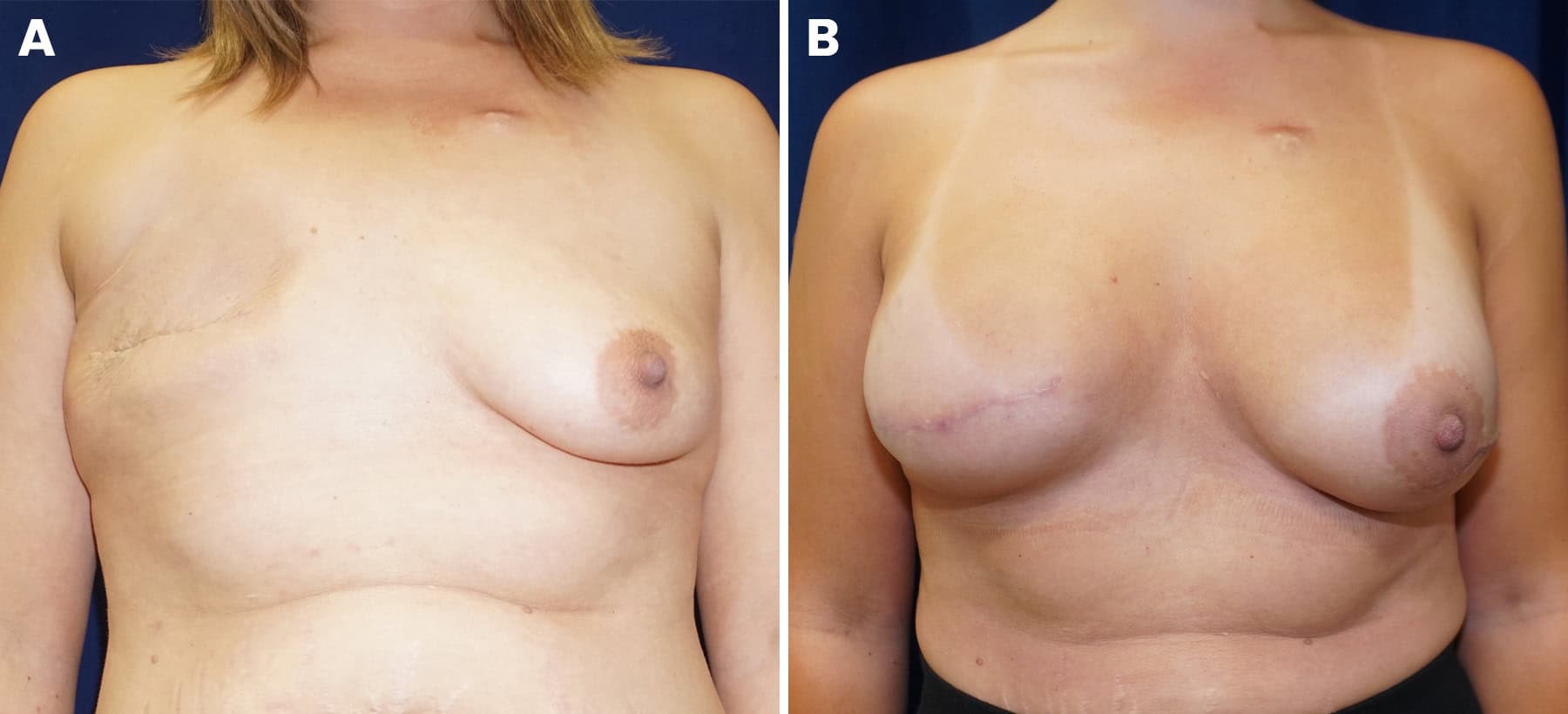
There are several reasons Dr. Li tries to avoid tissue expanders whenever possible:
- Dr. Li has extensive experience placing an implant on the day of mastectomy, this is called ‘direct-to-implant’ or DTI. She does not ‘need’ to place tissue expanders in most cases. In patients who wish to get a bigger cup size, she will place an implant at the time of mastectomy and come back for a 2nd surgery to upsize the implant (see gallery case 1207).
- Many patients find the expansion process very uncomfortable and sometimes painful. The filled expanders can feel very firm.
- The weekly visits for expansion are inconvenient for patients and the serial expansions can delay treatment such as chemotherapy or radiation
- Most tissue expanders are not MRI-scan compatible due to the presence of a metal fill port. Dr. Li has had patients who needed the tissue expander removed, in order to get an MRI scan for another medical condition.
- Tissue expanders themselves can get infected or flip (so the fill port is inaccessible), necessitating replacement in surgery. They can also leak – especially if they are poked in the wrong place by an inexperienced assistant! If they have been punctured, they will not fill and must be replaced in a second surgery.
- Radiated tissue expanders can lead to problems with healing because radiation tends to cause tightening of the tissues. This makes the tissue not amenable to stretching, which is exactly what a tissue expander does.
- If the tissue expander is filled too much, it can lead to permanent concave deformity of the ribs. This means that to get the same breast projection, we would need a large volume implant or a bigger tissue flap.
Tissue expanders are one of the commonest forms of breast reconstruction in the USA after mastectomy, for several reasons. There is an easier learning curve for inexperienced plastic surgeons and for insurance cases, placing a tissue expander has a higher reimbursement and guarantees a second surgery for the surgeon.
What is Autologous Breast Reconstruction?
As mentioned before, autologous breast reconstruction involves using your own tissues, including skin, muscle and fascia, to make the new breast or breasts. The tissue used is known collectively as a ‘flap’. The two commonest flaps performed worldwide involves transferring tissue from two locations:
- The tummy (‘abdominal flap’ also known as TRAM (transverse rectus abdominus muscle) or DIEP (Deep inferior epigastric perforator) flap and
- The back (‘LAT’ or latissimus dorsi) flap.
There are less common locations where flaps are taken (‘harvested’) including:
- Inner thigh: TUG flap = Transverse Upper Gracilis
- Upper thigh: PAP flap = Profunda Artery Perforator Flap
- Buttocks: SGAP flap = Superior Gluteal Artery Perforator and IGAP flap = Inferior Gluteal Artery Perforator
- Abdominal Omentum: Omental flap – this is using a fatty apron-like tissue that hangs down from your stomach, inside your abdomen to protect your abdominal organs
What is a pedicled vs a free flap?
When we create breasts using your own tissue, we need to have a blood supply to keep that newly transferred tissue alive. When the original blood supply is preserved, as seen in a latissimus flap, this is called a ‘pedicled flap’. The blood vessels are freed up with the tissue, and the flap is moved, still attached to its original blood supply. This is much like a pendulum, swinging from the back to the front of the chest.
This greatly reduces the risk of severe complications, like tissue necrosis or ‘loss of the flap’. In some cases, part of the tissue lives and this is known as ‘partial flap loss.’ Depending on the amount of tissue that is alive, there may still be enough tissue for a small breast. When a lot of tissue necrosis occurs, the transferred tissue ‘dies’ and needs to be removed and another option will need to be pursued. Latissimus flap loss rates are typically <1%.
In free flaps, the original blood vessel is dissected free and then divided. The cut end is then stitched to a ‘recipient’ blood vessel close to the future reconstructed breast. This newly stitched site, known as the ‘anastamosis’, can get blocked or kinked after surgery, which can lead to loss of part of, or the entire flap.
Current published free DIEP flap loss rates are higher than pedicled flaps, but in the region of 0 – 2.5%. This number could be higher in the hands of an inexperienced or technically unskilled plastic surgeon. Sometimes the recipient vessels may not be healthy, often due to radiation in the chest wall area as part of the breast cancer treatment, making this surgery more risky.
DIEP vs latissimus flap: which is better?
The DIEP and LAT flaps are by far the most common forms of autologous breast reconstruction world-wide. Of the two, it is usually down to personal choice and best discussed with your plastic surgeon. The LAT flap can be performed without an implant and be 100% autologous if there is enough back tissue (Figure 10). It is often combined with an implant to increase the volume and produce a more youthful look, with upper pole fullness. This is particularly true if the patient has an implant already on the other side.
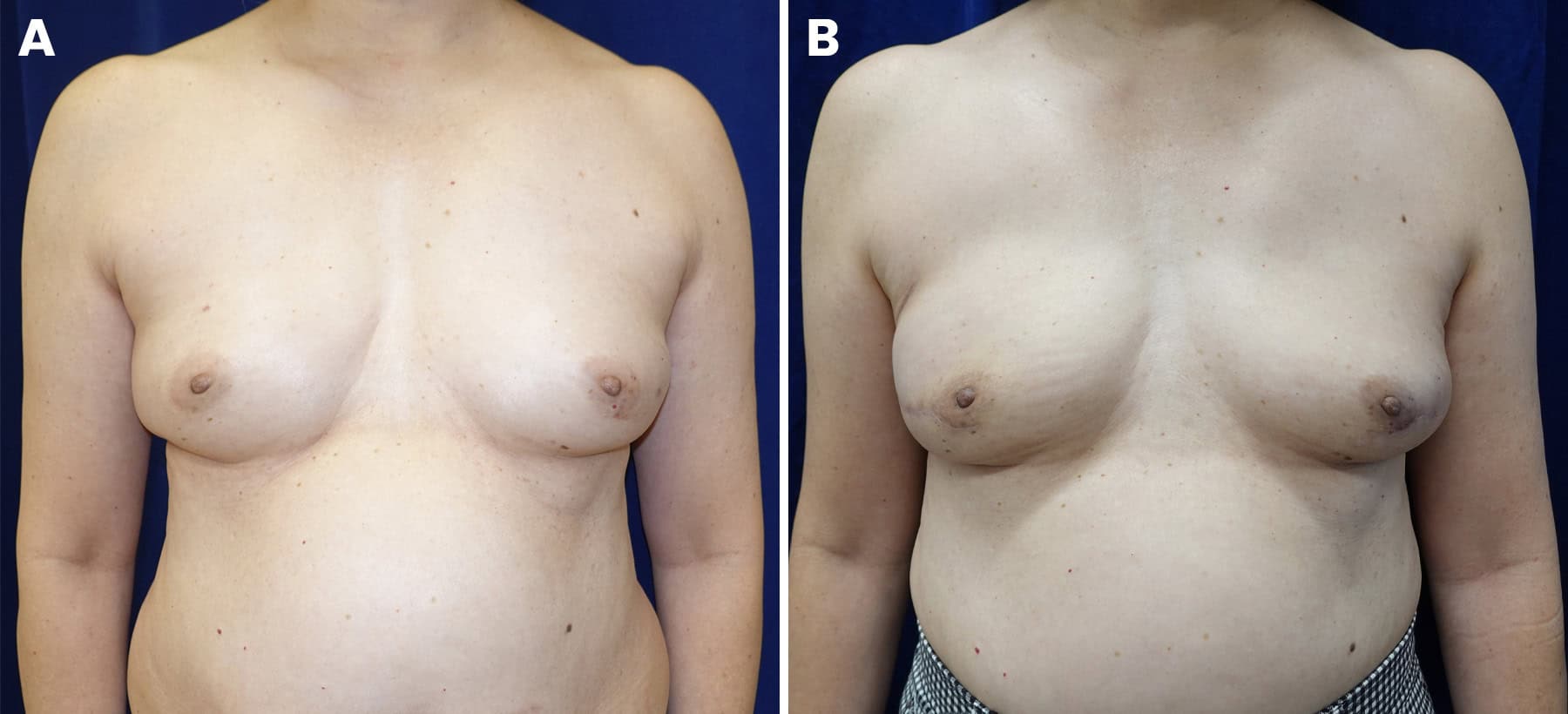
Some patients prefer a more natural look and do not like the idea of getting breast implants at all. In those patients, abdominal flaps may be a better option, depending on how much abdominal tissue you have and the final breast size desired (Figure 11). In very thin individuals, abdominal-based flaps are not an option because patients do not have enough tissue in their abdomen.
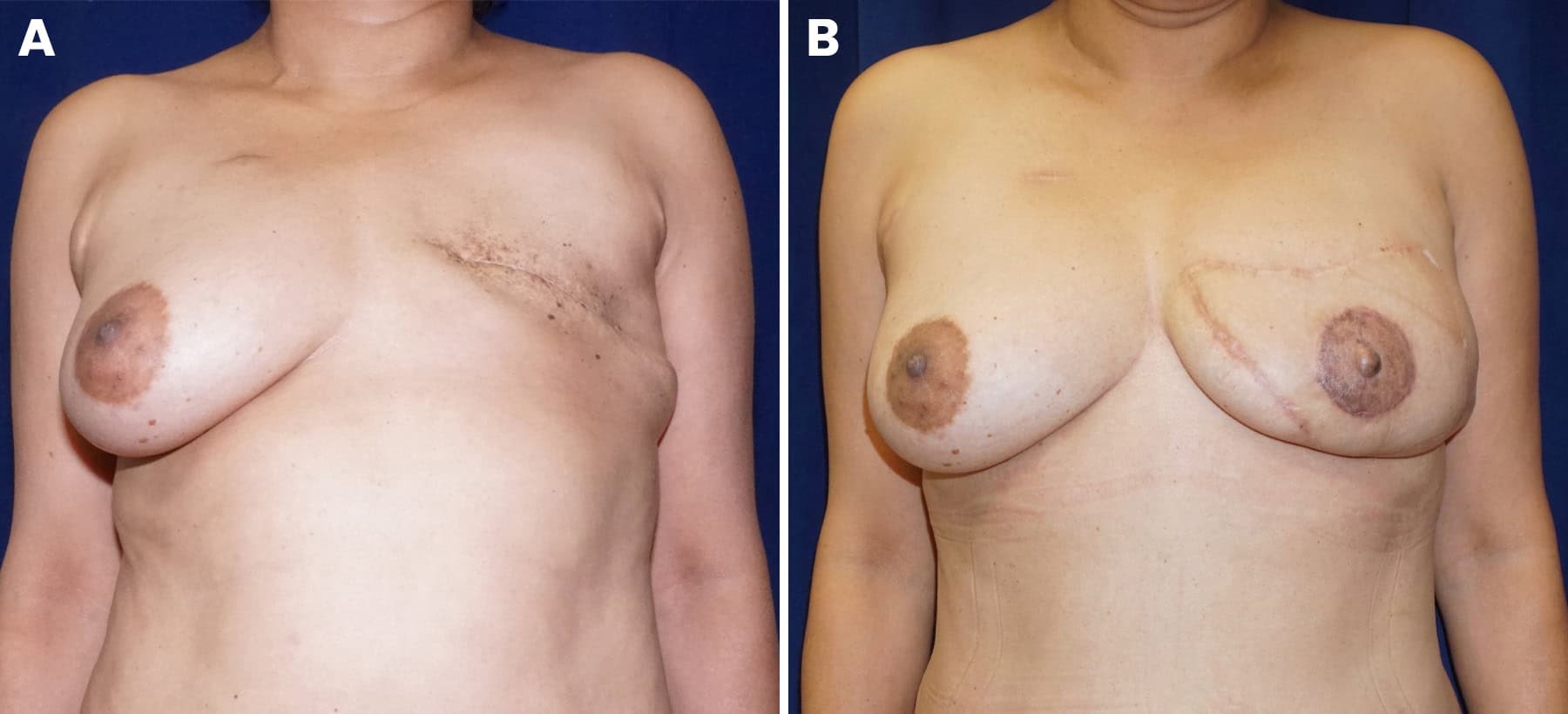
In those cases, alternative flaps, such as the latissimus flap would be a great option. In some parts of the world with lower BMI, such as China, the LAT flap is the most popular autologous breast reconstruction performed. Free flaps are usually significantly longer procedures, taking 6 – 8 hours typically. This timing is very dependent on the skills of your microsurgeon.
There are inherent risks associated with abdominal-based free flaps, such as DIEP flaps, including tissue necrosis; if the newly connected blood vessel is kinked or blocked by a clot, then the newly transferred flap could die and need to be removed by a second surgery. Because the abdominal tissue makes up your ‘core’ this could lead to lifelong abdominal wall weakness, ‘permanent bulge’ in the abdomen and, in some cases, hernia formation.
These risks should be discussed with your plastic surgeon during your initial consultation. Given the duration of surgery and inherent risks, not everyone is suitable to get abdominal-based flaps. These include smokers, patients with blood clotting disorders, poorly controlled diabetic patients and any patient who cannot be under general anesthesia for the many hours that are typically needed.
Why Dr. Li recommends the latissimus flap for autologous breast reconstruction
Having performed both free TRAM and DIEP flaps for years, Dr. Li no longer offers abdominal-based flaps for several reasons. Early in her training she saw how quickly latissimus flap patients recovered compared with patients who had tissue removed from their abdomen. After going into practice in 2015, Dr. Li noted that even long-term, the LAT flap patients did so much better than the DIEP/TRAM patients.
Some of the patients who had undergone DIEP/TRAM flaps did not like the ‘natural’ looking reconstructed breasts, with noticeable ptosis or ‘droopy’ breasts. Conversely, latissimus patients with an implant (hybrid reconstruction) were happy with their ‘lifted’ and ‘youthful’ look. Dr. Li personally performed numerous hernia repairs for patients who had undergone abdominal-based flaps.
Many of these patients felt that they hadn’t been fully warned about the consequences of having abdominal tissue removed. In contrast, her patients who underwent latissimus flaps made a much easier recovery.
What is the ‘Combined Bra-Line Back Lift Latissimus Flap’?
For the last 10 years, Dr. Li has refined her latissimus flap by orientating the back scar horizontally, so it can be hidden by the bra-line in most cases. The traditional way was diagonally (also known as ‘oblique’) and this could not be completely covered by the bra. She also noticed that in patients with excess ‘back rolls’, by extending the scar, she was able to perform a body contouring procedure to remove these back rolls (Figure 12) at the same time.
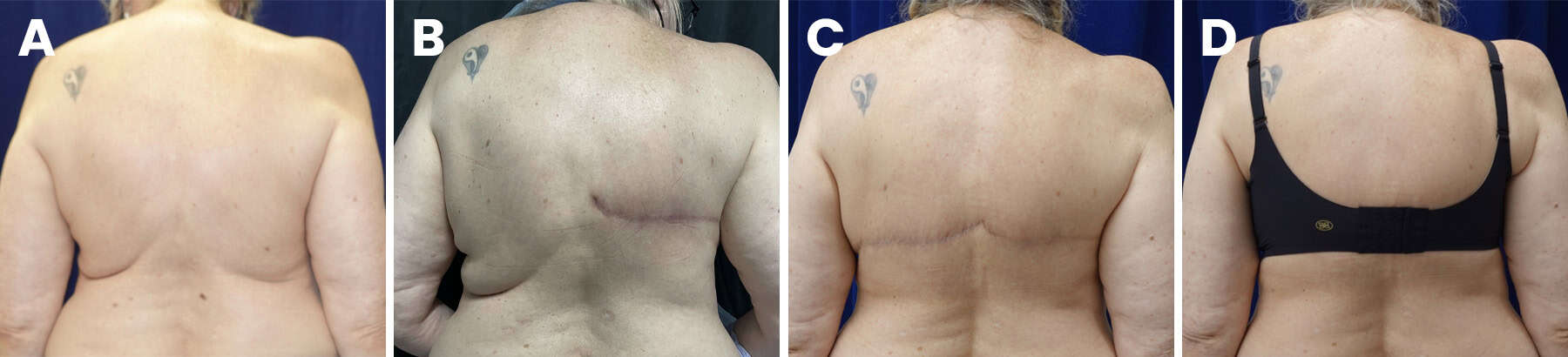
As a result of these refinements, she ‘invented’ the ‘Combined Bra-Line Back lift Latissimus flap (BLBL-LAT Flap) which was published in two major plastic surgery journals in 2024. She was also invited to make a podcast on her new procedure for the PRS-GO plastic surgery journal.
Another big benefit of using the LAT flap is that only one side of the back is used to reconstruct one breast. For abdominal-based flaps, regardless of whether patient needs one side or bilateral (both) breast reconstruction, both sides of the abdominal skin flap is taken at the time of surgery. This means that if a patient were to develop breast cancer in the future and the abdomen has already been used for the first surgery, then the abdomen cannot be used again.
What is oncoplastic breast reconstruction?
When a patient has a lumpectomy, (also known as a partial mastectomy), only the tissue containing the tumor and a margin of normal tissue is removed, leaving the rest of the breast tissue. Oncoplastic surgery are techniques used to disguise the defect after a lumpectomy, to eliminate an indentation or deformity. This indentation can worsen after radiation treatment, which is usually standard treatment in the setting of precancer (DCIS, Ductal cancer in situ and LCIS, Lobular cancer in situ) and invasive cancer. An oncoplastic surgery by a board-certified plastic surgeon can avoid such contour abnormalities by performing a breast lift, or mastopexy, in patients that want to disguise the deformity left by the lumpectomy (see Figure 13).
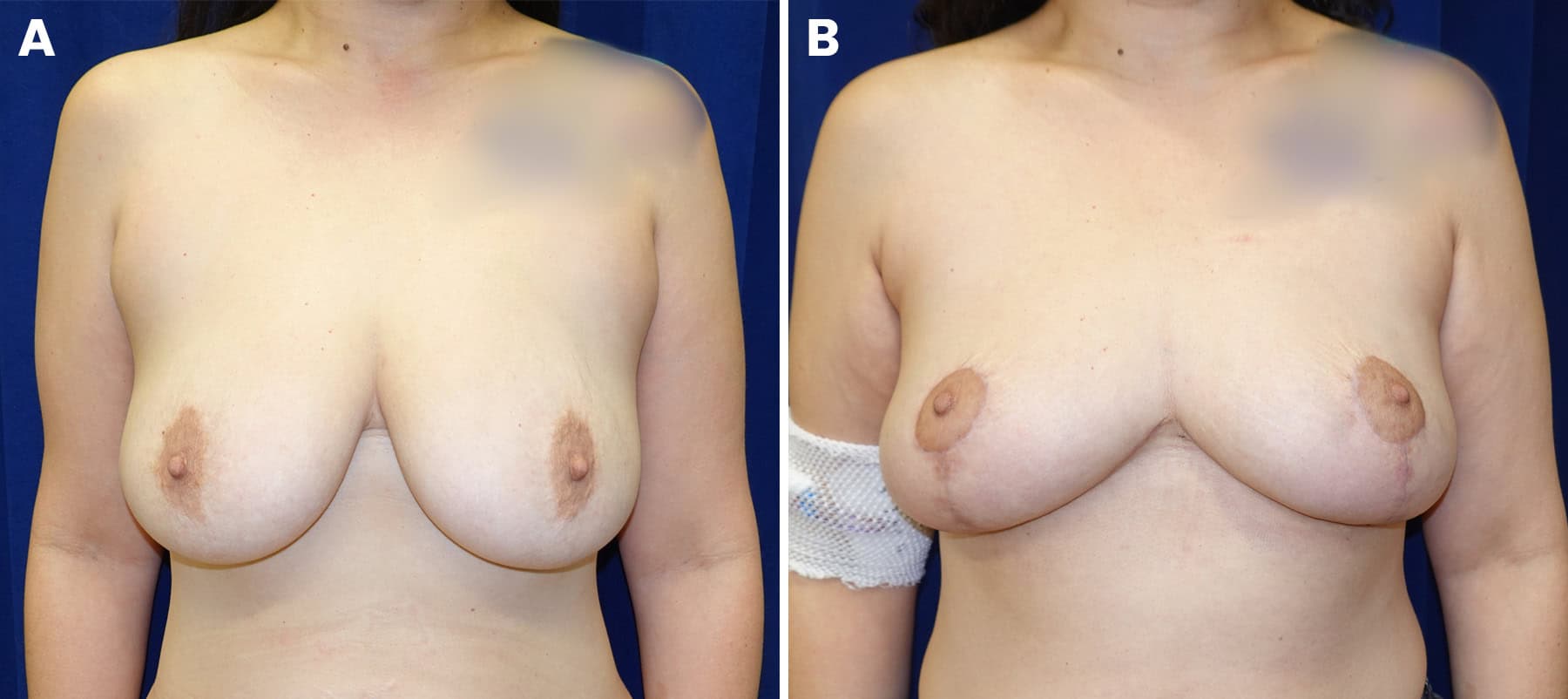
Alternatively, for patients wishing to reduce their breast size, an oncoplastic breast reduction can be performed. Some breast surgeons, or surgical oncologists, performing the lumpectomy may offer to do an oncoplastic mastopexy or reduction. It is important to assess their experience since their training and experience in these techniques may be limited. In recent years, there has been a trend for such surgeons to undergo some type of ‘accelerated’ course, often only lasting a weekend to be ‘certified’. In contrast, board-certified plastic surgeons go through vigorous training in breast reductions, breast lifts and tissue rearrangement techniques and usually have extensive experience during their residency training that cannot be replaced with an accelerated course.
Just like with mastectomy reconstruction, oncoplastic surgery can be performed immediately (same day as lumpectomy) or delayed-immediate (2-3 weeks later, after pathology results are finalized). Since most patients with breast cancer who undergo partial mastectomy or lumpectomy need post-surgery radiation, delayed oncoplastic surgery is not recommended. This is because radiated tissue does not respond well to being rearranged and often will have problems healing, regardless of the time interval between radiation and new surgery. This means if you want a mastopexy or reduction, you must do this before you get radiation.
What are the alternatives to Breast Reconstruction?
If you decide not to get breast reconstruction; you need to let your breast surgeon (or surgical oncologist) know what you are expecting. This is the surgeon performing the mastectomy or lumpectomy. Most women who do not want to get reconstruction, think that if they ask for ‘no reconstruction’ they will end up with symmetric tidy scars and be flat. This can be the case, but it is safer to discuss this in detail with your breast surgeon so that there are not surprises. Please read the information on aesthetic flat closure.
Am I a Breast Reconstruction Candidate?
Most patients are candidates to get breast reconstruction. However, this does depend on your extent of disease, the amount of tissue that is expected to remain after the cancer surgery, your body habitus and general medical health. Patients that are higher risk candidates for breast reconstruction include active smokers, high or low BMI patients, patients with active infection and patients with other medical comorbidities and unable to withstand longer time under general anesthesia. It is important that your plastic surgeon reviews your medical history with you during the initial consultation and explains the risks of getting surgery.
Dr. Wai-Yee Li’s Areas of Expertise for Breast Reconstruction
Dr. Li has performed many reconstructions including implant based and autologous reconstruction. She is particularly familiar with direct-to-implant implant breast reconstruction and avoids the use of tissue expanders when possible. Her special skills and experience, that are not widely available include Goldilocks procedure, Esthetic Flat Closure and the combined Bra-line Back lift LAT (BLBL-LAT) flap. Unlike other plastic surgeons, Dr. Li also specializes in revision breast surgery including removal of ruptured implants, capsular contraction, asymmetric reconstructed breasts, revision of previous flap surgery and delayed breast reconstruction.
What can I expect at my Breast Reconstruction Consultation
Dr. Li will ask about your cancer journey; whether you have active cancer or you are fully recovered. She will review your past medical and surgical history, medications and allergies and perform a physical examination, including recording breast measurements. If you are comfortable, she will take photographs for your medical chart, that do not include your face.
She will discuss your options and give her recommendations. We are also able to perform the initial consultation using telehealth for international patients and patients in the USA, who live too far to travel to our offices in Pasadena and Arcadia, California. We are an all-women practice and offer a safe and compassionate space for all our patients.
I already scheduled surgery with a plastic surgeon. Can I get a second opinion?
Yes. Many patients seek Dr. Li to get a second opinion. In these cases, Dr. Li is happy to review your current surgical plan and give you a candid and safe opinion. These are your personal records, held within our HIPAA-compliant medical record system. We fully respect your confidentiality and these records are not easily viewable by other medical personnel without your consent or request.
Several patients have been able to avoid potential complications, based on their reassessment by Dr. Li and an improved surgical plan. Some patients decide to get surgery from Dr. Li, whilst others may take Dr. Li’s recommendation back to their own plastic surgeon.
Will There Be Any Scars After Surgery?
Yes, there will be scars after surgery. The final scar depends on the mastectomy; nipple-sparing mastectomy is when the nipple is kept and skin-sparing mastectomy, is when the nipple is removed. Your breast surgeon will discuss with you the pros and cons of the procedure and whether you are a candidate. If implant-based reconstruction is performed, the same scars for mastectomy are usually used for reconstruction.
For nipple-sparing mastectomy Dr. Li often uses a side or lateral scar with a small extension around the lower outer 1/4 of the areola. Some patients prefer to have a hidden scar along the inframammary fold – this is where a wire sits in a wired bra. It is important to discuss this with your plastic surgeon before the surgery. For all surgery on the breast, Dr. Li will place hidden dissolvable stitches, that usually result in a fine line scar, avoiding visible ugly stitch marks.
What are the Risks of a Breast Reconstruction Surgery?
Getting breast reconstruction is usually a very safe procedure. There are risks that are related to the patient and some related to the surgery itself. Patients that are at higher risk of getting complications from surgery include those who are active smokers (difficult to heal and it is recommend quitting smoking 6 weeks before surgery or avoid reconstruction), poorly controlled diabetics, heavy (BMI> 30) patients, very thin patients (BMI 18 or less) and patients with bleeding or clotting disorders. Regardless of implant or autologous reconstruction, general risks of surgery include bleeding, infection and risk of general anesthesia.
Technique specific complications include those related to breast implants such as capsular contraction, ALCL (anaplastic large cell lymphoma – rare disorder associated with textured implants), silicone leak, implant infection, scarring, breast asymmetry. Furthermore, all implants should be changed every 10-15 years. Recommended surveillance of silicone implants for silent rupture (meaning implants are leaking but no symptoms) include MRI or high-resolution ultrasound scanning after 5 years and every 2-3 years thereafter.
For autologous reconstruction, complications include flap necrosis (partial or complete flap loss), donor site morbidity such as abdominal bulge or hernias with abdominal flaps; scarring, abdominal scars (hip-to-hip) and back scars and seroma formation for latissimus flaps.
Which Breast Implant Brands Does Dr. Li Offer?
The two largest breast implant companies world wide are Allergan (owned by AbbVie) and Mentor (owned by Johnson & Johnson). Dr. Li only works with FDA approved devices and recommends implants from both of these companies. She has recently started to work with Motiva implants, which were approved by the FDA in the USA last year for cosmetic augmentation.
Whilst new to USA, Motiva implants have been used worldwide for over 10 years. Motiva implants are reported to have a lower capsular contraction and leak rate due a unique manufacturing design. Instead of having the usual implant ‘shell’ and ‘filling’ like the candy, M and M, they are made as a single piece (TrueMonobloc technology)and coated with their Smoothsilk coating. This is designed to decrease rupture rates. These implants are currently awaiting FDA approval for breast reconstruction.
What is the Recovery Time After a Breast Reconstruction Surgery?
The commonest recovery time is 6 weeks of no driving, no lifting more than 5 pounds. Most patients can go back to work at 8 weeks after surgery.
What Can You Expect After a Breast Reconstruction Surgery?
For immediate implant breast reconstruction:
Same day: you should be able to walk unaided, regular eating and drinking and may need oral pain medication, depending on your pain level. You may be able to go home the same day or some patients stay overnight.
1 day after surgery: Dr. Li allows her patients to shower, regardless of whether they have drains. Patients need to remove their dressings before shower and replace them afterwards for 3 days in total.
7 Days after surgery: you should be feeling more normal. You may still be taking pain medication, but may have decreased the amount now. At this time, you will be seen by Dr. Li and her team. If you had more than 1 drain placed, you may have one removed during this visit, depending on how much is coming out of the drain (‘output’).
2 weeks after surgery: you should be doing well at this stage and if you have no drains left, can start physical or occupational therapy within a few days. You should be off all pain medications.
3 months after surgery: you should be back to normal. You will be driving and should have gone back to work. You can resume all exercise at this point. The implants will usually have settled at this point.
6 months after surgery: you should be fully recovered. If you need nipple replacement options, now is the time to consider your options, including nipple reconstruction and 3D Nipple areolar tattoo.
For autologous breast reconstruction with LAT flap:
Same day: you may be able to walk to the bathroom with assistance; drinking and eating may have resumed. You will be on a scheduled oral pain control regimen and may need additional oral pain medication, depending on your pain level. You will stay overnight.
The day after surgery, Dr. Li and her team will check on you in the hospital. You will be allowed to shower and be seen by the occupational therapist (OT) and physical therapist (PT) to assess your movements and be taught how to avoid injury. Patients need to remove their dressings before shower and replace them afterwards for 3 days in total. The back scar is typically covered closed with buried dissolvable stitches and the skin is covered with glue and does not need dressings.
7 Days after surgery: you should be feeling more normal. You may still be taking pain medicines but may have decreased the amount now. At this time, you will be seen by Dr. Li and her team. You may have one drain removed during this visit, depending on the output.
2 weeks after surgery: you should be doing better at this stage but not quite back to normal. You may have more drains removed. You may be on lower strength pain medication such as Tylenol.
4 weeks after surgery: all your drains should be removed, and you should start therapy to regain the strength in your arms.
3 months after surgery: you should be back to normal. You will be driving and should have gone back to work. You can resume all exercise at this point. If you have implants, they will usually have settled at this point.
6 months after surgery: you should be fully recovered. If you need nipple replacement options, now is the time to consider your options, including nipple reconstruction and 3D Nipple areolar tattoo.
How to Find the Best Plastic Surgeon for a Breast Reconstruction
When you are seeking a plastic surgeon for your breast reconstruction it is important to find a Board-certified plastic surgeon. Ideally, you should find a plastic surgeon that has been recommended by friends and family that you trust, who have had a similar procedure. There are many surgeons who operate under the guise of a ‘cosmetic surgeon’ who may not have gone through the vigorous training of a board-certified plastic surgeon.
Check out Dr. Li’s YT video on “Board Certified Plastic Surgeon’s TOP 3 SECRETS to choosing a plastic surgeon below.
Even plastic surgeons who focus mainly on cosmetic procedures, such as breast augmentation or facelifts, are not ideal for breast reconstruction, since they will rarely understand the nuances of cancer care. Recommendations from your breast or oncologic surgeon can sometimes work out but are not a guarantee for success. If these surgeons are working within the same institution, such as a cancer center, they may recommend the plastic surgeon out of convenience or complying with institutional protocols and not based on quality of surgery and care. Similarly, reviews from past patients on the institutional websites, within a large organization or academic center are typically filtered to get rid of any negative reviews.
These should be seen as biased reviews and not to be relied upon. Do your homework! Ask to see before and after results. Rushing to get breast reconstruction surgery by a bad plastic surgeon will come back to haunt you, if you have complication after complication. In the worse case scenario, can even delay your next cancer treatment.
Is Breast Reconstruction Surgery Covered by Insurance?
Yes. Most breast reconstruction is covered by insurance. It is mandated by law. Revision breast reconstruction is usually decided on a case-by-case basis. Depending on your insurance plan, you may not be able to choose the best plastic surgeon for your desired reconstruction, since many experienced and highly skilled plastic surgeon are no longer ‘in network’.
Dr. Wai-Yee Li is not a Medicare provider and is not in network for any commercial insurances. In many cases, Dr. Li and her team can work with commercial PPO insurances, as an out-of-network surgeon, but this is on a case-by-case basis. Some of her patients elect to pay cash for revision breast reconstruction surgeries as they value her skill, expertise and compassionate care. Please contact her office at LA Breast and Body for more information.
Why Choose Dr. Wai-Yee Li for a Breast Reconstruction?
Dr. Li has extensive experience in breast reconstruction and cosmetic surgery of the breast. After working for 10 years at a busy cancer center, specializing in complex breast reconstruction, she opened her solo all-women private practice, LA Breast and Body in order to provide excellent surgery, first-class pre- and post-surgery care, compassion and a safe space for patients to be heard.
She is both honest and direct and will let you know what is possible and may not be realistic. Having been in the community for more than a decade, she has access to a network of other clinicians that can help you navigate a system that is often frustrating and broken. Both newly diagnosed and long term survivors of breast cancer are often too overwhelmed, emotionally and physically, to seek a second opinion. Dr. Li and her team are here to help and guide you. Don’t just take our word for it, check out our online reviews from her happy and grateful patients – Google My Business, Healthgrades, and Yelp.
Breast Reconstruction FAQ
How Often Should I Get My Breast Implants Checked?
Once your implants are healed and settled, Dr. Li recommends seeing your plastic surgeon once a year. She offers all her patients lifelong annual follow up, if they choose to do so.
How can you tell if a breast implant is leaking? Do I need a scan?
If you have saline implants, you will know within a day or two, because the implant will deflate. For silicone implants, you may not have any noticeable changes or symptoms. To verify, you should have a visit with your plastic surgeon to get examined and ultimately might need an MRI or High Resolution Ultrasound scan (HRUS). Dr. Li offers HRUS in her office and this is currently complimentary for all her patients.
Do I need to change my implants in future?
Yes. Implants are not designed to stay in forever. Current FDA recommendations are to start implant ‘surveillance’ after 5 years of placement, using MRI or HRUS. If scan is normal, then this needs to be repeated every 2-3 years.
How do I know what type of reconstruction is the right one for me?
You need to meet with a Board-certified plastic surgeon who is experienced in breast reconstruction for a consultation. During that meeting, she or he, should review your options, based on your desired look, lifestyle, medical history and body habitus.
Can I get reconstruction after mastectomy and radiation?
Yes. You can. But there are some differences because radiated tissue does not behave like unradiated tissue. We recommend autologous reconstruction. Check out Dr. Li’s concise video explaining this:
Patient stories
What patients say about breast reconstruction
Dr. Wai-Yee Li has been my reconstructive plastic surgeon twice, in 2017 following a bilateral mastectomy and in 2025 following an implant rupture. Both surgeries were done in a skilled, expert, caring, and professional manner. In addition, Dr. Li’s technique, artistry, and her bedside manner are extraordinary.
I have met many doctors since being diagnosed with breast cancer and I can honestly say Dr. Li is one of the best. Her approach during our first meeting in 2023 immediately made me feel comfortable and heard. My previously radiated reconstructed breast had a ruptured implant and capsular contracture so there was much to consider. She took her time explaining my options and addressing my fears. Dr. Li and Nurse Practitioner Traci were very engaging at every visit and projected an optimism that gave me the hope I needed to get through the process once again. I love that I had women caring for me and encouraging me along the way. Dr. Li performed a partial capsulectomy and latissimus dorsi flap reconstruction followed by a mastopexy and dog ear removal 9 months later. This week I completed the process with a 3D nipple tattoo done by Traci in their new office. I still can’t believe how good it all looks! I can’t thank Dr. Li and Traci enough for their commitment to making our lives better, I highly recommend!
Absolutely the BEST reconstruction plastic surgeon in the world! Dr. Li is the kindest person. She truly cares about her patients. I had stage 3 breast cancer with a double mastectomy. Dr. Li did a Latissimus Dorsal surgery on me. I couldn’t be happier. I highly recommend Dr Li! All of her staff are wonderful people. Traci is like Dr. Li’s left hand. What a great team they are together.
I first met Dr. Li in 2023. While going through breast cancer treatment, I needed to make a decision about what type of breast surgery and reconstruction would be best for me. Dr. Li presented me with all of the options available and with her wonderful guidance, she helped me make my decision. I am so happy with the outcome! Her kindness, professionalism and expertise is top notch! I would recommend her 100%!!
Questions about coverage? Insurance coverage for breast reconstruction ›
A reconstruction that did not go to plan? Revision breast reconstruction ›
Coming from Pasadena or the San Gabriel Valley? Breast reconstruction in Pasadena ›
Dr. Li’s signature technique: The Bra-Line Back Lift LAT Flap ›
Want to see how each option works? How It Works ›
Not sure which option is right for you? Understand your options ›
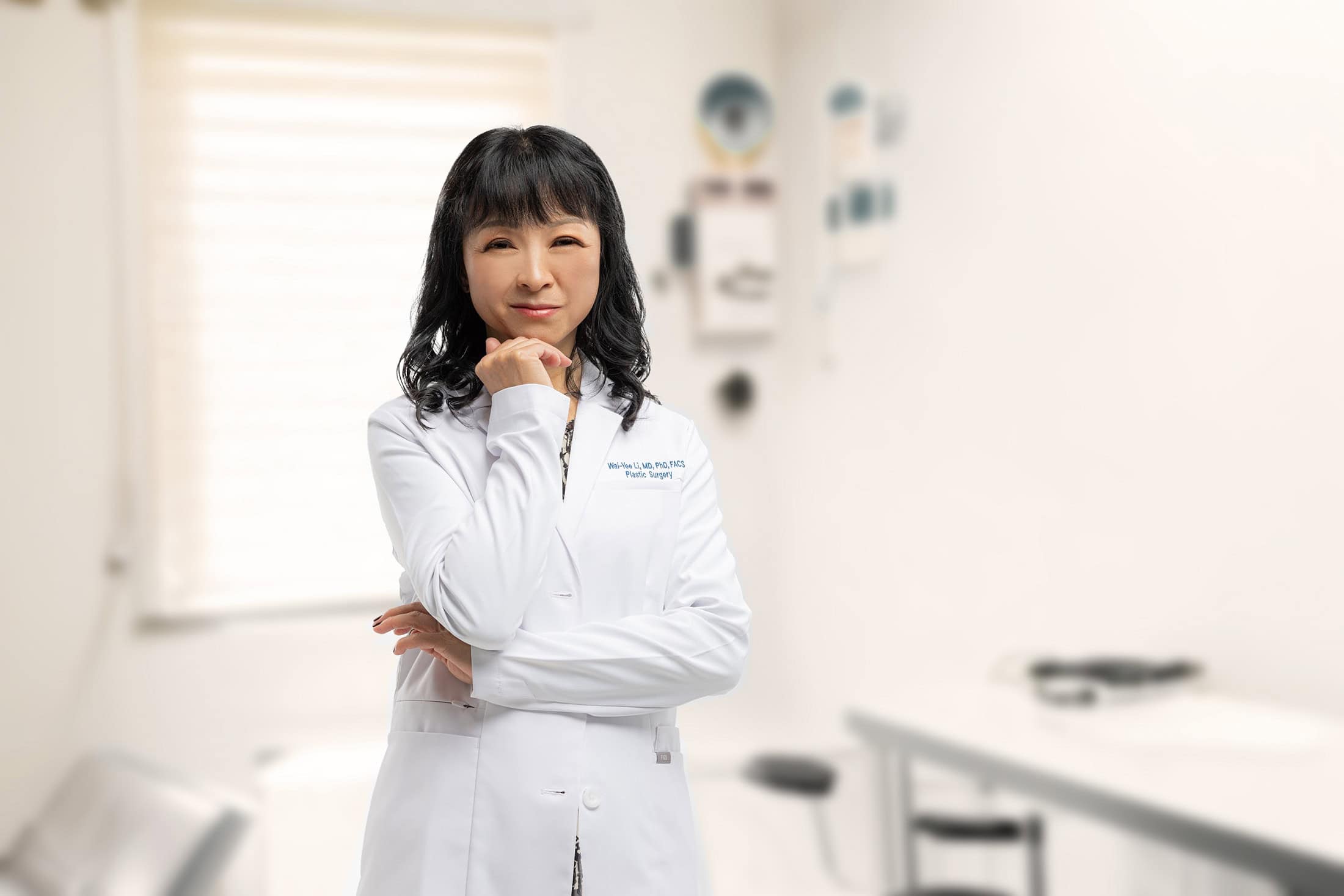
Meet your surgeon
Dr. Wai-Yee Li,
MD PhD FACS
A female board-certified plastic surgeon in Arcadia, Los Angeles, specializing in aesthetic and reconstructive breast surgery — with a focus on the best surgical outcomes, less pain and minimal scarring.
Meet Dr. Wai-Yee Li ›



Patient reviews
Rated 5.0 from 227+ reviews across Google, Yelp, Healthgrades & U.S. News
Read patient reviews ›Take the next step
Considering breast surgery?
Book a consultation with Dr. Wai-Yee Li, or call the practice to discuss your options.
Visit the practice
Two locations across Los Angeles
Arcadia
Get directions ›Pasadena
Pasadena, CA 91105