
Adolescent & Congenital Breast Surgery
What is adolescent and congenital breast surgery?
Adolescent and congenital breast surgery treats breast conditions in teenagers and young patients — reduction for severe adolescent hypertrophy, and reconstruction of underdeveloped or markedly asymmetric breasts — performed by Dr. Wai-Yee Li, who trained in pediatric plastic surgery caring for patients from the NICU to age 18.
Adolescent and congenital breast surgery treats breast conditions that affect teenagers and young patients — very large breasts that develop early, breasts that do not develop as expected, a marked difference between the two sides, and differences that are present from birth. Dr. Wai-Yee Li treats these conditions at LA Breast & Body, drawing on training that very few plastic surgeons hold: after her residency at the University of Southern California (USC) in Los Angeles, she completed a fellowship in craniofacial and pediatric plastic surgery, caring for patients from the newborn intensive care unit (NICU) to age 18.
This page is written for families. If you are a parent or guardian concerned about your daughter's or son's breast development, its purpose is to explain the conditions, how Dr. Li approaches them, and — just as importantly — how she thinks about when, and whether, to operate at all.
Why so few practices treat young patients
Breast surgery in a growing patient is not simply a smaller version of adult surgery. Development is still under way, the body is still changing, and the emotional weight of adolescence is real. Most cosmetic plastic surgery practices are built around adults and do not routinely see teenagers or children. Dr. Li's background is different. She spent her fellowship years, and the years since, caring specifically for younger patients, and she has treated teenage girls with breast asymmetry throughout her career. A plastic surgeon comfortable consulting with children, teens, tweens, and young adults — working inside an all-women practice — is uncommon, and it is the reason families are referred here.
What conditions does Dr. Li treat in young patients?
Dr. Li sees a range of breast concerns in adolescence and young adulthood. Some cause physical symptoms, some affect how a young person feels in his or her own body, and some are present from birth. The main ones are below.
Severe adolescent breast hypertrophy
'Hypertrophy' means overgrowth. Some teenagers develop breasts that become disproportionately large, sometimes quite rapidly, during puberty. The strain is both physical and social. Physically, heavy breasts can cause chronic neck, back, and shoulder pain, deep grooving where bra straps dig into the shoulders, and skin irritation or rash under the breast — a condition called 'intertrigo.' Socially, they can make a teenager self-conscious and limit sport and everyday activity during years that should be spent on other things. When the overgrowth is severe and symptomatic, the treatment is a breast reduction — but for a young patient the timing of that surgery is weighed carefully, not rushed.
Underdeveloped (hypoplastic) breasts
'Hypoplastic' means underdeveloped. In some young women one or both breasts do not develop as expected — they may stay very small, or one side may lag noticeably behind the other. Where this affects a young patient's confidence and development has stabilized, reshaping to restore a more balanced, natural contour can be discussed. Depending on the situation, that conversation may draw on the reconstructive techniques Dr. Li uses across her breast practice or, for an appropriately mature patient, breast augmentation. Which path fits, and when, is decided in person, with the family — never on a web page.
Marked breast asymmetry
Some difference between the two breasts is normal; very few women are perfectly symmetric. Marked asymmetry is different — one breast is substantially larger, shaped differently, or positioned differently than the other, enough to make clothing difficult and to weigh on a young patient's self-image. Dr. Li has treated teenage girls with breast asymmetry throughout her career. One approach she is experienced in is a 'symmetrizing reduction,' where only the larger breast is reduced to match the smaller side; in other situations the smaller side is what needs to be addressed. The right plan depends on the specific difference and is worked out together at consultation.
Congenital breast differences
Some breast differences are 'congenital' — present from birth, or emerging as the body develops. These vary widely and can involve the shape of the breast, the chest wall, or the nipple and areola. Dr. Li assesses them with the same care she brought to her pediatric surgical training, explains what is happening in plain language, and lays out the options honestly, including the option to do nothing for now. Because congenital differences differ so much from one patient to the next, there is no single answer — the assessment comes first.
Gynecomastia in teenage and young adult males
Breast development in boys and young men is called ‘gynecomastia,’ and it commonly appears during puberty. True gynecomastia is firm glandular tissue behind the nipple, not simply extra weight, which is why exercise often does not resolve it. As with the other conditions on this page, timing matters as much as technique in a young patient, and waiting is a legitimate option. Dr. Li treats gynecomastia in teenage boys as well as in men, and consultations include the family. Read more on the male breast reduction page.
Why pediatric plastic surgery training matters here
The real differentiator in this work is Dr. Li's training. After completing her plastic surgery residency at USC in Los Angeles, she went on to a fellowship in craniofacial and pediatric plastic surgery — the subspecialty devoted to operating on children and adolescents. That is why she describes caring for patients "from the NICU to age 18." A surgeon with this background understands that a young body is still changing, that growth affects results, and that a teenager in a consultation deserves to be spoken to directly and respectfully, not talked over.
Her wider experience supports this work as well. Dr. Li is a board-certified plastic surgeon who spent ten years at a busy cancer center on the West Coast of southern California, where she gained extensive breast and reconstructive experience. That reconstructive foundation — the same one behind her breast reconstruction practice — is what lets her approach an underdeveloped or asymmetric breast as a question of restoring shape, not simply adding or removing volume.
There is a human side too. Dr. Li is a mother of two daughters, now young adults, and she consults with younger patients using a sensitive, unhurried approach. Her experience, petite stature, and personable style help teens and young adults feel comfortable rather than intimidated, especially within an all-women practice where every member of the team, from the front desk to the surgeon, is a woman.
When is the right time for surgery?
For a young patient, timing is often the most important decision, and it is made carefully with the patient and family — not by a fixed age. Breasts continue to change through the teenage years, and operating before development has stabilized enough can compromise a lasting result. Dr. Li weighs where a young patient is in her growth, how much the condition is affecting her physically and emotionally, and what waiting would mean, before any surgery is planned.
Waiting is always presented as a legitimate option. Sometimes the honest recommendation is to monitor and reassess later, and Dr. Li will say so plainly. There is no pressure to decide, and no promise is made about candidacy on a first visit or on this page. Whether an operation is right — and when — is determined in person, together.
What is a consultation like for a young patient?
Consultations for patients under 18 always include a parent or guardian. Dr. Li begins by listening — to the young patient first, and to the family — to understand what is bothering her and what she hopes for. She performs a physical examination, which for breast concerns includes standard measurements, and when it helps the discussion she takes photographs of the upper body for the chart, excluding the head and face. She then explains what she is seeing and what the options are in plain language, using photos or diagrams where they help, and leaves plenty of room for questions from both the patient and her family.
Younger patients are welcome, and encouraged, to bring a parent, and Dr. Li finds many teens are most comfortable with their mother in the room. The tone is educational and calm, and no one is asked to make a decision on the spot.
What about recovery?
Recovery depends entirely on which procedure, if any, is planned, so it is discussed specifically once a plan exists — not promised in advance. In general, Dr. Li and her team guide each patient and family through the healing period step by step, with scheduled follow-up visits and clear instructions, and most patients return to normal activity gradually. For the detailed recovery that follows a reduction specifically — the week-by-week after surgery, and how drains and pain are managed — the breast reduction page walks through it fully.
One general surgical rule is worth stating for older teens: nicotine of any kind — smoking, vaping, or nicotine gum and patches — must stop for at least eight weeks before any operation, because nicotine blocks wound healing. Dr. Li reviews this and every other preparation step with the family well ahead of time.
Why families choose Dr. Li
Dr. Li is a female, board-certified plastic surgeon (MD PhD FACS) whose training and experience line up unusually well with the needs of young patients: a craniofacial and pediatric plastic surgery fellowship after her USC residency, ten years of breast and reconstructive work at a major cancer center, and a career that has included caring for teenagers with breast concerns. She is also a mother of two daughters, now young adults, who runs an all-women practice. You can read more about her training and background on her bio page. None of that is a promise of a particular outcome — it is the reason a concerned family can expect an honest, careful, and unhurried assessment.
To talk through your daughter's or son's situation with Dr. Li, book a consultation in Arcadia or Pasadena, or call 626.888.9728.
Frequently asked questions
It depends on the condition and on growth. For severe adolescent hypertrophy, timing is weighed with the patient and family once development has stabilized enough for a lasting result — and waiting is always presented as an option. Dr. Li's pediatric training guides that judgment.
Yes. Marked asymmetry and underdeveloped (hypoplastic) breasts are among the conditions she treats, drawing on both her reconstructive practice and her pediatric plastic surgery background — caring for patients from the newborn intensive care unit to age 18.
Always. Consultations for patients under 18 include the family, cover every option including waiting, and move at the family's pace.
Yes. Severe adolescent breast hypertrophy — breasts that grow disproportionately large and cause neck, back, and shoulder strain, skin irritation, and real limits on daily life — can be treated with a breast reduction. For a young patient the timing is weighed carefully with the family once growth has stabilized enough for a lasting result, and waiting is always offered as a legitimate option.
After her plastic surgery residency at the University of Southern California, Dr. Li completed a fellowship in craniofacial and pediatric plastic surgery — the subspecialty for operating on children and adolescents — and cares for patients from the newborn intensive care unit to age 18. Very few plastic surgeons hold this background, which is why families with young patients are referred to her.
Not as a routine decision, and never by a fixed age. Underdeveloped or asymmetric breasts are assessed carefully, and any reshaping is weighed with the patient and family once development has stabilized. Whether augmentation, a symmetrizing reduction, or simply waiting is right is determined in person — the practice makes no candidacy promise for a minor on a web page.
That is part of the point. LA Breast & Body is an all-women practice, from the front desk to the surgeon, and Dr. Li — a mother of two daughters, now young adults — consults with younger patients using a sensitive, unhurried approach. Her experience and personable style help teens and young adults feel at ease rather than intimidated, with a parent alongside them throughout.
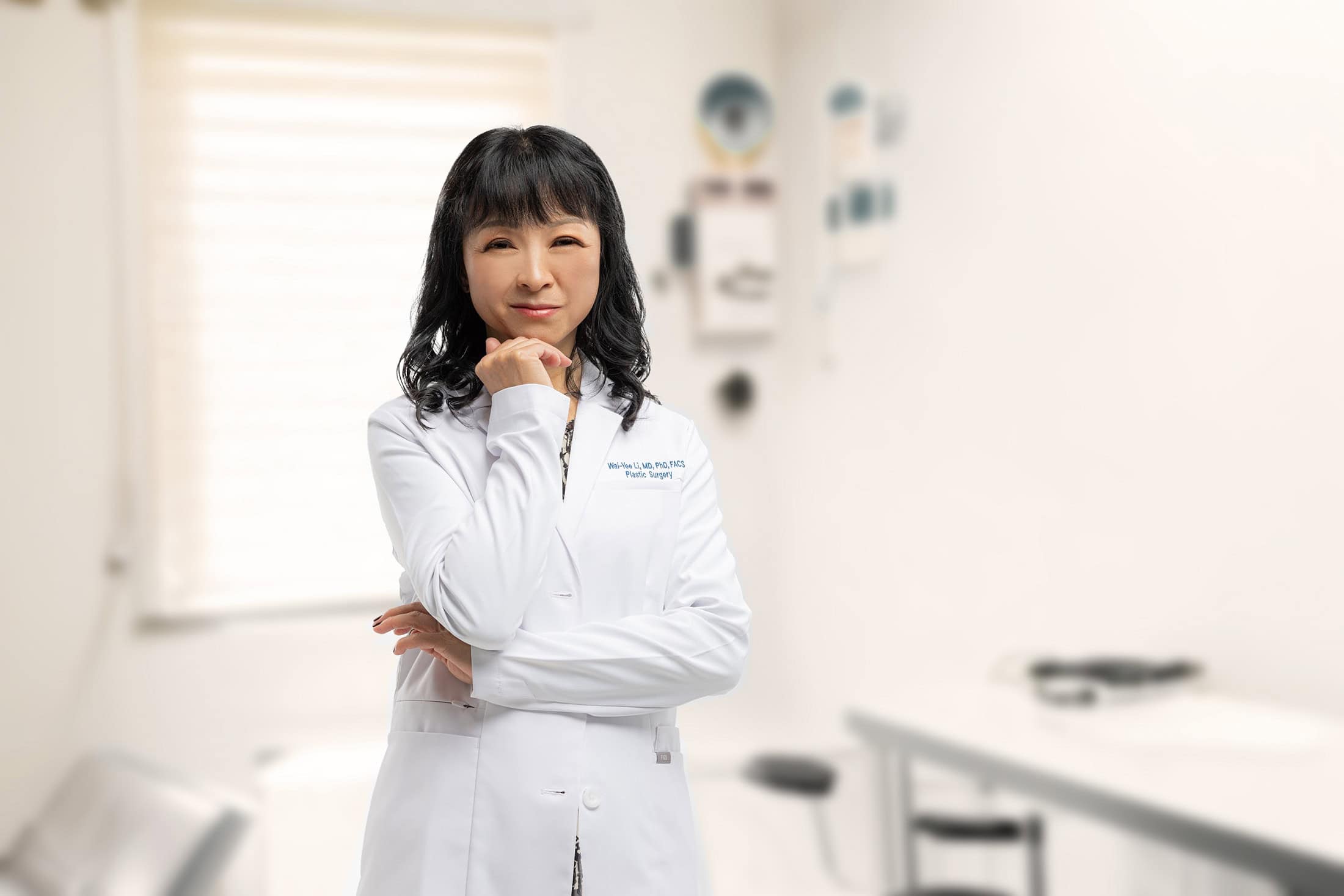
Meet your surgeon
Dr. Wai-Yee Li,
MD PhD FACS
A female board-certified plastic surgeon in Arcadia, Los Angeles, specializing in aesthetic and reconstructive breast surgery — with a focus on the best surgical outcomes, less pain and minimal scarring.
Meet Dr. Wai-Yee Li ›



Patient reviews
Rated 5.0 from 227+ reviews across Google, Yelp, Healthgrades & U.S. News
Read patient reviews ›Take the next step
Considering breast surgery?
Book a consultation with Dr. Wai-Yee Li, or call the practice to discuss your options.
Visit the practice
Two locations across Los Angeles
Arcadia
Get directions ›Pasadena
Pasadena, CA 91105