
Neurofibroma Removal
Can neurofibromas be removed in a single visit?
Yes — Dr. Wai-Yee Li removes neurofibromas under local anesthetic with sessions planned so multiple lesions come off in one visit, a practical difference for patients with neurofibromatosis. Each excision is closed with a plastic surgeon’s attention to the final scars.
Neurofibromas are benign — non-cancerous — growths that develop from the covering of a nerve, and they can appear as a single soft bump or, for people with neurofibromatosis, by the dozen. Dr. Li removes them in the office under local anesthetic, with a plastic surgeon's attention to the final scars, and can take off multiple lesions in a single visit.
What is a neurofibroma?
A neurofibroma is a benign — non-cancerous — tumor that grows from the 'nerve sheath,' the layer of tissue that wraps around and protects a nerve. Most are soft to the touch and sit either on the skin or just beneath it, where they feel like a small, movable bump. They tend to grow slowly and are usually painless, though one can become tender when it sits somewhere it is rubbed or pressed. Neurofibromas are among the more common benign growths that arise from nerve tissue, and a soft one at the surface can often be gently pressed inward through the skin — a feel that helps tell it apart from other kinds of lumps.
Neurofibromas come in more than one form. A 'cutaneous' neurofibroma sits in the skin itself and looks like a soft, fleshy bump; a 'subcutaneous' one sits deeper, under the skin; and a larger 'plexiform' type can grow along a length of nerve and is more involved. Most people who come in for removal have the common skin and just-under-the-skin kind. Which type you have is part of what Dr. Li assesses at the consultation, because it shapes how — and whether — a given lesion is best removed.
What about neurofibromatosis (NF)?
Neurofibromatosis (NF) is a genetic condition in which the body forms many neurofibromas, sometimes dozens or more, over a lifetime. If you are living with NF, you already know the practical weight of that — growths that catch, rub, or simply add up. This is where seeing a plastic surgeon who can plan removal at scale makes a real difference.
For patients with neurofibromatosis, Dr. Li plans sessions so that several lesions come off in one visit rather than one growth at a time across endless appointments. Which lesions, and how many, is decided together — the consultation prioritizes the ones that are painful, catching on clothing, or most visible to you.
It is worth being clear about what removal does and does not do. Removing a neurofibroma treats that individual growth — its discomfort, its catching, its appearance. It does not treat the underlying condition, and it does not stop new neurofibromas from forming, which is why the medical management of NF itself stays with the specialists who care for it. What Dr. Li offers is the surgical side: taking off the lesions that bother you, cleanly, and in as few visits as is practical.
Why do people have neurofibromas removed?
People have neurofibromas removed when a growth becomes uncomfortable, gets in the way, or bothers them to look at. Because these lesions are benign, removal is usually a choice about comfort and appearance rather than an urgent medical need — though anything that is changing should always be looked at.
Common reasons include:
- Size or growth. A neurofibroma that has grown larger, or keeps growing, can become hard to ignore.
- Discomfort or tenderness. One sitting under a waistband, bra strap, or collar gets pressed and irritated through the day.
- Catching. Raised lesions snag on clothing, jewelry, or a razor.
- Appearance. A visible growth on the face, neck, or hands — or the cumulative look of many — can weigh on how you feel.
- A change. Any lesion that changes in size, color, or feel, or becomes newly painful, deserves evaluation; if a growth looks or behaves more like a changing mole or skin lesion, Dr. Li assesses it as such rather than assuming.
Whatever the reason, the goal is the same: to relieve what bothers you while leaving the smallest possible mark behind.
Are neurofibromas close to nerves?
Because a neurofibroma grows from the sheath of a nerve, some sit close to nerve tissue — and that is exactly why each lesion is judged on its own. Most cutaneous and just-under-the-skin neurofibromas are superficial and straightforward to remove. Others, particularly larger or deeper ones, sit nearer to the nerve they came from, and the honest approach is to assess each before removing it.
At the consultation, Dr. Li examines the lesions you want addressed and plans the approach lesion by lesion — its size, its depth, where it sits. That is the value of having a surgeon make the call in person rather than a blanket promise on a web page. Many growths come off simply in the office; a few may warrant more discussion about how best to proceed. You will know where each one stands before anything is done.
A plastic surgeon's attention to the scar
Every excision leaves a mark — the honest aim is to make it the finest line the site allows. This is where Dr. Li's training as a plastic surgeon shows. Rather than simply lifting the growth off, she plans where the incision falls, keeps it as small as the lesion allows, works along the skin's natural tension lines, and closes in layers so the skin heals as neatly as possible.
That care matters even more when several neurofibromas are removed. For someone with neurofibromatosis, the result is not one scar but many, spread across the body — so the quality of each closure adds up. A general excision gets the lump off; a plastic surgeon's closure is what you live with afterward. No one can promise an invisible result, and Dr. Li will not — skin heals differently from person to person and place to place — but minimizing and thoughtfully placing each scar is the whole point of having this done by a plastic surgeon.
What to expect during removal in the office
Neurofibroma removal is an in-office procedure done under local anesthetic. The area around the lesion is numbed, so you are awake and comfortable during the removal, and you drive yourself home afterward — there is no hospital stay and no general anesthetic. For most people, the biggest surprise is how routine it feels.
Dr. Li performs these removals in her own procedure room, which keeps the experience calm, private, and unhurried. When several lesions are being taken off in one visit, that dedicated setting is what makes a multi-lesion session practical. LA Breast & Body is an all-women practice environment, which many patients — especially those coming in repeatedly over the years — find more comfortable.
Dr. Li sees patients in Arcadia and Pasadena, with an upcoming South Pasadena office adding a dedicated in-office procedure room for exactly this kind of work.
Removed tissue can be sent to pathology to confirm what it is, and Dr. Li goes through the result with you in plain language. This is routine — examining excised tissue under the microscope is standard practice — not a cause for alarm.
Aftercare is straightforward. Dr. Li's team sends you home with simple instructions for keeping each site clean, and any stitches and a follow-up are arranged as part of the plan. Most people get back to their normal day quickly after a small office removal, and Dr. Li and her team guide you through what to watch for as each site heals.
Is neurofibroma removal right for me?
Whether, and which, neurofibromas to remove is decided in a consultation, not in advance. Dr. Li examines the lesions that bother you, talks through your priorities, and builds a removal plan around them: which growths, how many in a session, and the approach for each.
Because this is a real surgical excision, even a small one carries the ordinary risks of any procedure — some bleeding, a small chance of infection, a scar, and occasionally altered sensation near the site. Dr. Li reviews your health and anything that affects wound healing so the plan fits you. Most cutaneous neurofibromas are simple office removals; the consultation is where you find out what your situation actually calls for.
If you are managing neurofibromatosis, the plan is also about pace. There is no need to take everything off at once. Dr. Li works with you over time, prioritizing what matters most to you now and building from there.
Why choose Dr. Li
Dr. Wai-Yee Li is a female, board-certified plastic surgeon (MD, PhD, FACS) whose background is a genuine fit for this kind of work. She spent ten years at a busy Southern California cancer center, where she removed many skin cancers and other skin lesions — years of hands-on experience taking growths off the skin cleanly and closing them well.
That combination — the diagnostic caution of someone who has handled skin lesions at a cancer center, and the closure skills of a plastic surgeon — is what she brings to neurofibroma removal. You can read more about her training and experience on Dr. Li's page.
Neurofibromas are one of several benign growths Dr. Li removes in the office. If you also have a soft lump that turns out to be fatty rather than nerve-related, that is a lipoma removal; a spot that looks like a mole or a changing skin growth is handled as mole and skin-lesion removal. Many patients have more than one kind, and they can often be addressed in the same visit.
To find out whether neurofibroma removal is right for you, and to map which lesions to prioritize, book a consultation with Dr. Li in Arcadia or Pasadena, or call 626.888.9728.
Frequently asked questions
Yes — that is central to how Dr. Li plans these sessions, especially for patients with neurofibromatosis, prioritizing the lesions that are painful, catching, or most visible.
The procedure is done under local anesthetic — the area is numbed, you are awake and comfortable, and you drive home after.
Yes — a consultation maps which lesions bother you most and builds the removal plan around your priorities, including how many can come off in one session.
A neurofibroma is a benign — non-cancerous — growth from the covering of a nerve, so removal is usually about comfort and appearance rather than an urgent medical need. Even so, any growth that changes in size, color, or feel should be examined, and removed tissue can be sent to pathology to confirm what it is. Most are exactly what they appear to be.
No. Removal treats the individual growth — its discomfort, catching, or appearance — but it does not treat the underlying condition and does not prevent new neurofibromas from forming. The medical management of neurofibromatosis stays with the specialists who care for it, while Dr. Li provides surgical removal of the lesions that bother you.
Any excision leaves a mark; the goal is the finest line the site allows. As a plastic surgeon, Dr. Li plans the incision along the skin’s natural lines, keeps it as small as the lesion allows, and closes in layers. No result is invisible and healing varies from person to person, but thoughtful scar placement is central to how she removes these.
Removed tissue can be sent to pathology, where it is examined under a microscope to confirm what it is, and Dr. Li goes through the result with you in plain language. This is routine for excised tissue, not a cause for alarm — most neurofibromas are benign nerve-sheath growths, exactly as they appear.
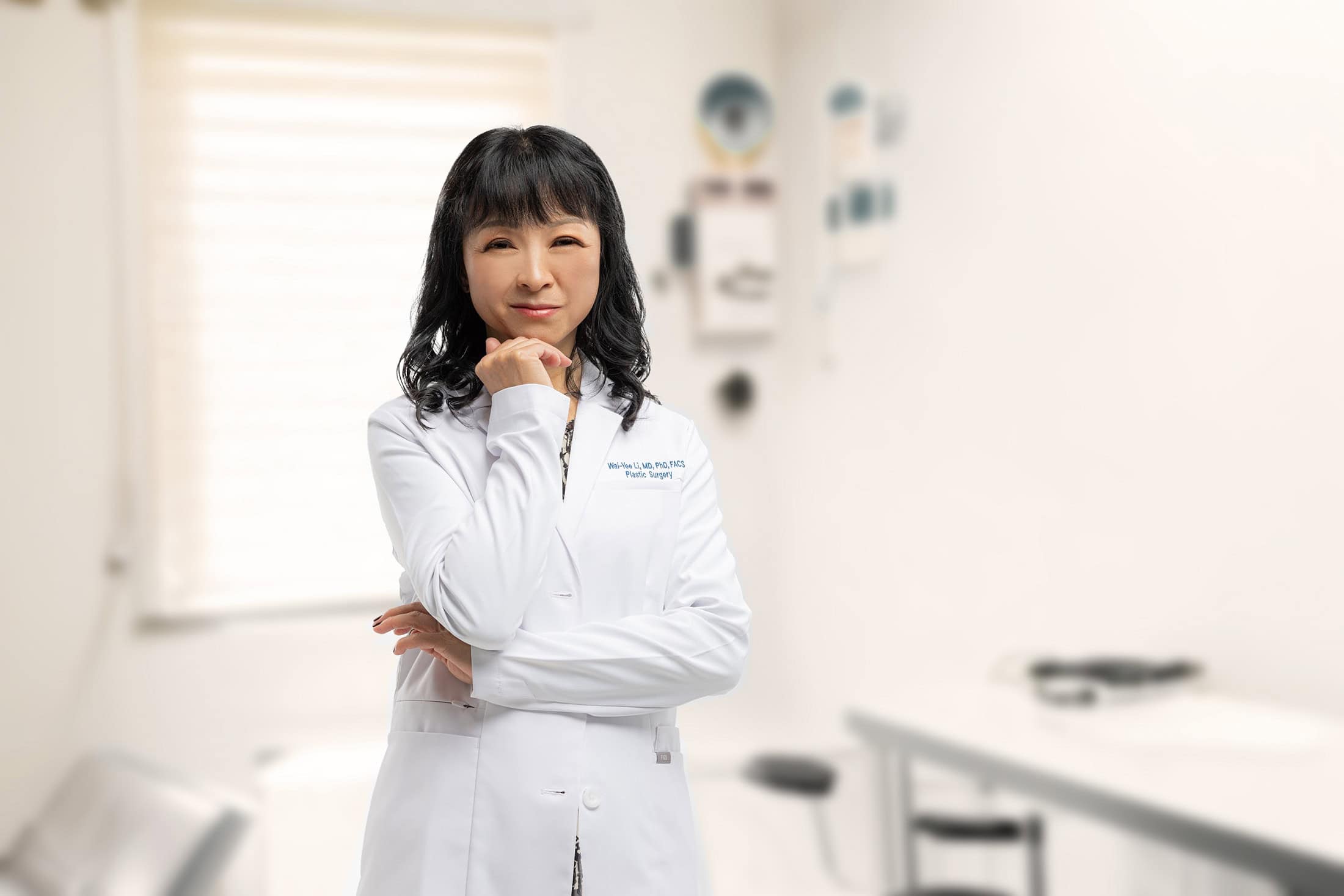
Meet your surgeon
Dr. Wai-Yee Li,
MD PhD FACS
A female board-certified plastic surgeon in Arcadia, Los Angeles, specializing in aesthetic and reconstructive breast surgery — with a focus on the best surgical outcomes, less pain and minimal scarring.
Meet Dr. Wai-Yee Li ›



Patient reviews
Rated 5.0 from 227+ reviews across Google, Yelp, Healthgrades & U.S. News
Read patient reviews ›Take the next step
Considering breast surgery?
Book a consultation with Dr. Wai-Yee Li, or call the practice to discuss your options.
Visit the practice
Two locations across Los Angeles
Arcadia
Get directions ›Pasadena
Pasadena, CA 91105