
Skin Cancer & Mole Removal
Who removes skin cancers and moles at LA Breast & Body?
Dr. Wai-Yee Li excises and biopsies skin cancers, moles, and other lesions under local anesthetic in the office, with a plastic surgeon’s attention to the final scar — experience built removing many skin cancers during her years at a busy cancer center.
At LA Breast & Body, Dr. Li excises and biopsies skin cancers, moles, and other skin lesions under local anesthetic, in the office, with a plastic surgeon's attention to the final scar. For a decade at a busy cancer center in Southern California, she removed many skin cancers — always striving for a beautiful scar — and she brings that same standard to patients across Arcadia, Pasadena, and South Pasadena. These are in-office procedures you can book now.
What does Dr. Li remove?
Dr. Li removes skin cancers, moles, and a range of other skin lesions, and she can biopsy a spot that needs a diagnosis before anything else is decided. A 'biopsy' simply means taking a sample of tissue — or the whole lesion — so a laboratory can examine it and say what it is. Most of this work is done in a single, unhurried office visit under local anesthetic. What she treats includes:
- Skin cancers. Excision of diagnosed or suspicious skin cancers, taking a margin of normal-looking skin around the lesion where that is appropriate, with the wound closed by a plastic surgeon rather than left open or roughly stitched.
- Moles. Raised, changing, irritated, catching on clothing or a razor, or simply unwanted — removed cleanly, and sent for examination when a diagnosis is warranted.
- Other skin lesions. Cysts, skin tags, and various benign growths assessed and, where appropriate, removed in the same visit.
Two related in-office removals have their own pages: lipoma removal for the soft, benign fatty lumps that form under the skin, and neurofibroma removal, including sessions planned so several lesions can come off in one visit. If you are not sure which category a lump or spot falls into, that is exactly what the consultation is for.
When should a mole or skin spot be checked?
Any mole or skin lesion that is new, changing, non-healing, or bleeding should be evaluated by a clinician. That is standard dermatologic guidance, and it is a prompt to get an opinion — not a reason to panic. Most moles are harmless, and most spots people worry about turn out to be benign. The point of an evaluation is to know, rather than to keep wondering.
A widely taught way to remember the warning signs of melanoma is the ABCDE guide. It is a reminder to seek an opinion, not a tool for diagnosing yourself:
- A — Asymmetry. One half of the mole does not match the other.
- B — Border. The edges are irregular, ragged, notched, or blurred.
- C — Color. The color is uneven or includes more than one shade — brown, black, and sometimes patches of red, white, or blue.
- D — Diameter. The spot is larger than most moles, though melanomas can also be small.
- E — Evolving. The mole is changing in size, shape, color, or feel, or it starts to itch, crust, or bleed.
No single one of these signs makes a diagnosis, and their absence does not guarantee that a spot is harmless. The honest message is simpler than the letters suggest: if something has changed, or a lesion just bothers you, it is reasonable to have it looked at. Dr. Li can examine it, tell you plainly what she sees, and — if a diagnosis is needed — biopsy it and send the tissue to pathology.
What are the common types of skin cancer?
The three most common skin cancers are basal cell carcinoma, squamous cell carcinoma, and melanoma. Basal cell and squamous cell carcinomas are by far the most common; they are strongly linked to long-term sun exposure, tend to grow locally, and are frequently treated by removing them. Melanoma is less common but more serious, because it can spread — which is why early evaluation of a new or changing pigmented spot is worth taking seriously. This is general information: only an examination and, where needed, a biopsy can tell what a particular lesion actually is.
Because ultraviolet (UV) exposure is the main risk factor you can do something about, sun protection — shade, protective clothing, and daily broad-spectrum sunscreen — is worth building into ordinary life, both before and after any removal. It protects healthy skin and helps a fresh scar settle.
Why have a plastic surgeon remove a skin cancer or mole?
Every removal leaves a mark; the real question is what kind. A plastic surgeon plans the excision along the skin's natural lines and tension, closes the wound in careful layers, and handles the tissue gently so the lasting result is a fine line rather than a patch or a divot. That difference matters most on the face, neck, chest, and hands, where a scar is hard to hide.
This is where Dr. Li's background is directly relevant. For a decade she worked at a busy cancer center where removing skin cancers was routine, and she was always striving for a beautiful scar even as the first priority stayed where it belongs — clearing the cancer. A larger removal sometimes needs more than a simple straight-line closure to heal well, and as a plastic surgeon she has the reconstructive options to manage that. You can read more about her training and experience on Dr. Li's page.
How does the procedure work in the office?
Skin cancer and mole removal at LA Breast & Body is done under local anesthetic in the office — no hospital, no general anesthetic. The area is numbed, you stay awake and comfortable, and you drive yourself home afterward. Most removals are straightforward and completed in a single visit.
Dr. Li examines the lesion, explains what she recommends and why, and numbs the area before she begins. Sometimes the goal is a diagnosis first, so she takes a biopsy; sometimes a lesion is removed in full in the same sitting. For a skin cancer, she removes the visible lesion along with a 'margin' of surrounding normal-looking skin where that is appropriate; for a mole or benign growth, she removes it through the cleanest excision the lesion allows. The wound is then closed with the layered technique a plastic surgeon uses to give a scar its best chance of fading. A dedicated in-office procedure room arrives with the practice's new South Pasadena office, so some of this work will move into that private space — but the procedure itself is available now, and the all-women team means many patients feel more at ease, especially for lesions in private or sensitive areas.
What happens to the tissue that is removed?
Removed tissue is sent to a pathology laboratory for examination. That is how a definitive diagnosis is made and, for a cancer, how the margins are checked to see whether the lesion was fully removed. Dr. Li goes through the pathology result with you in plain language once it returns. If a lesion turns out to be benign, that is usually the end of it. If a skin cancer needs wider treatment, a different approach, or coordination with another specialist, she tells you honestly and helps you plan the next step. She will not overstate what a single office excision can and cannot do — a straight answer is part of the care.
Will there be a scar?
Yes. Any time the skin is cut, it heals with a scar — there is no honest way around that, and no one can promise otherwise. What a plastic surgeon can influence is how that scar turns out. Its final appearance depends on where it sits on the body, how much tension the skin is under, your own skin type and how you heal, and how the wound is cared for while it matures. Dr. Li plans the incision along natural skin creases where possible and closes it in layers to take tension off the surface, which gives the line its best chance to soften. A scar continues to change for months after the stitches are gone, and protecting it from the sun during that time genuinely helps.
Dr. Li's approach
Dr. Li's approach to skin surgery is unhurried and honest. She would rather explain what a spot is, what removing it involves, and what the scar is likely to look like than move you quickly toward a procedure. Where a lesion only needs watching, she will say so; where it needs a biopsy, she explains why before anything is done. The aim is that you leave understanding your skin and your options, whether or not you decide to have anything removed that day.
Is skin cancer or mole removal right for me?
Whether, when, and how a lesion should be removed is determined at your consultation, not on a web page. A spot that is changing or looks suspicious may call for evaluation and a biopsy; a mole that is simply bothersome, catching, or unwanted may be removed for comfort or appearance once anything concerning has been ruled out. Dr. Li will not promise a diagnosis, a cure, or a particular result sight-unseen. She examines the lesion, lays out the honest options, and lets you decide with the facts in front of you.
What is recovery like?
Recovery from an in-office skin excision is usually straightforward, though it varies with the size and location of the removal and with how your skin heals. Dr. Li and her team give you clear wound-care instructions — how to keep the area clean, what to watch for, and when any sutures come out — and they are reachable if a question comes up. Because everyone heals a little differently, your specific guidance comes from Dr. Li at your visit rather than from a fixed timeline printed on a page.
Why Dr. Li
Dr. Wai-Yee Li is a board-certified plastic surgeon (MD, PhD, FACS) whose decade at a busy cancer center included removing many skin cancers with an eye on the final scar. That combination — genuine oncologic experience together with a plastic surgeon's standard for how skin heals — is why patients across Arcadia, Pasadena, and South Pasadena come to her for removals they want done carefully. No referral is needed to be seen; you can read more about Dr. Li or simply bring your questions to a consultation.
To have a skin cancer, mole, or other lesion assessed, book a consultation with Dr. Li in Arcadia or Pasadena, or call 626.888.9728.
Frequently asked questions
Because every removal leaves a mark, and a plastic surgeon plans the excision along natural skin lines and closes it in layers — so what remains is a fine line. That difference matters most on the face, neck, and chest.
No — local anesthetic in the office. You are awake, comfortable, and drive yourself home after.
No referral is needed to be seen. If a lesion needs a diagnosis first, Dr. Li can biopsy it, send it to pathology, and explain the result plainly before anything further is planned.
Have any mole or spot evaluated if it is new, changing, non-healing, or bleeding, or if it looks asymmetric, has an irregular border, uneven color, or is growing — the widely taught ABCDE warning signs of melanoma. This is standard guidance meant to prompt an opinion, not to diagnose yourself. Most spots turn out to be harmless, and an evaluation simply settles the question.
Yes, when a diagnosis matters. Tissue that Dr. Li removes can be sent to a pathology laboratory, which is how a lesion is definitively identified and, for a skin cancer, how the margins are checked to confirm it was fully removed. Dr. Li explains the pathology result in plain language once it returns and, if further treatment is needed, helps you plan the next step.
Any time skin is cut it heals with a scar, so no removal is truly mark-free. What a plastic surgeon influences is how that scar looks: Dr. Li plans the incision along natural skin lines, closes it in layers to reduce tension, and manages the tissue so it heals as a fine line where possible. A scar keeps softening for months, and sun protection helps it settle.
Sometimes, but not always — and Dr. Li will not promise a cure sight-unseen. Excising a skin cancer with a margin of normal skin, then confirming the margins on pathology, can fully address many early, straightforward cancers. Others need wider treatment, a different technique, or coordination with another specialist. Dr. Li is honest about what a single office excision can and cannot do before anything is scheduled.
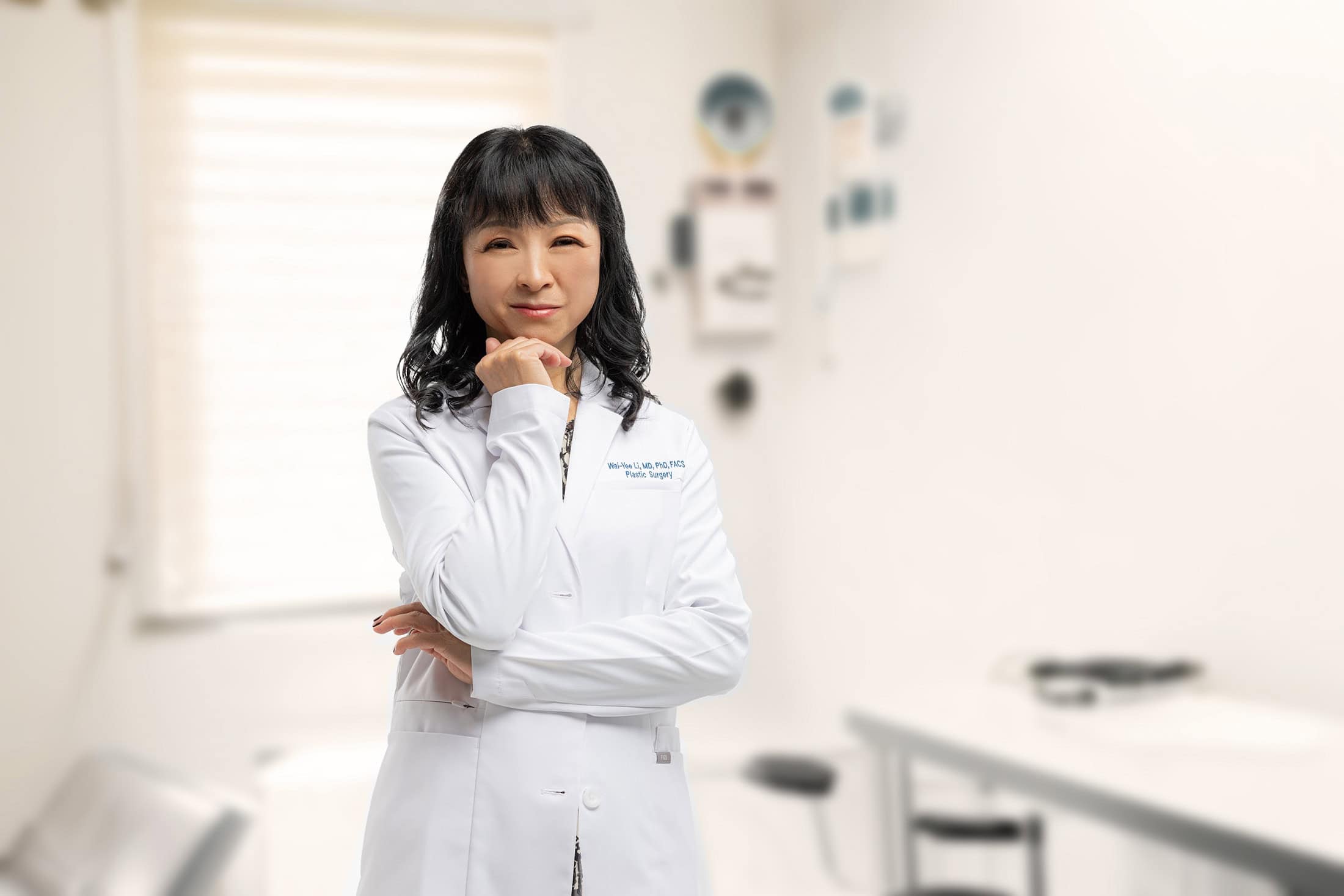
Meet your surgeon
Dr. Wai-Yee Li,
MD PhD FACS
A female board-certified plastic surgeon in Arcadia, Los Angeles, specializing in aesthetic and reconstructive breast surgery — with a focus on the best surgical outcomes, less pain and minimal scarring.
Meet Dr. Wai-Yee Li ›



Patient reviews
Rated 5.0 from 227+ reviews across Google, Yelp, Healthgrades & U.S. News
Read patient reviews ›Take the next step
Considering breast surgery?
Book a consultation with Dr. Wai-Yee Li, or call the practice to discuss your options.
Visit the practice
Two locations across Los Angeles
Arcadia
Get directions ›Pasadena
Pasadena, CA 91105